Are Couples' Dietitians the New Marriage Therapists?
Our take
The rise of “couples’ dietitians” as a relational support system speaks volumes about our current cultural landscape, one increasingly interwoven with wellness anxieties and the pursuit of optimized living. The article’s focus on Jen Ziel's experience, navigating a vegetarian lifestyle alongside a meat-eater, highlights a surprisingly common tension point in modern relationships: differing dietary choices. It’s no longer simply about personal preference; food has become laden with ethical considerations, health concerns, and even political alignments. This is amplified by the broader societal conversation surrounding food, weight, and body image, a conversation currently dominated by the influence of GLP-1 medications – as explored in Let’s Discuss GLP-1 "Nonnegotiables". The emergence of a professional to mediate these discussions underscores a growing need for external guidance in navigating these complexities, suggesting that traditional relationship therapy may not always adequately address the deeply personal and often emotionally charged nature of food-related disagreements.
The demand for couples’ dietitians isn't merely about resolving mealtime conflicts; it's about addressing the underlying anxieties and power dynamics that these conflicts expose. Food choices can be powerfully symbolic, representing values, autonomy, and even a sense of control. A partner's insistence on a specific diet, or conversely, a refusal to accommodate another's needs, can easily escalate into a battleground for deeper relational issues. The modern obsession with “optimizing” health – often fueled by social media trends and a relentless pursuit of peak performance – can further exacerbate these tensions. Consider the current debate around healthy sun exposure, where conflicting information creates confusion and anxiety, mirroring the broader challenges in navigating wellness advice The Healthy Sun Exposure Debate Is Here—What's Hype, What's Dangerous, and What's Actually True. The willingness to invest in a specialist to navigate these nuances suggests a shift in how we approach relationship maintenance—moving beyond emotional processing towards a more holistic, lifestyle-integrated model of support. It also speaks to a desire for practical solutions; therapy can help unpack feelings, but a dietitian can offer tangible strategies for compromise and co-creation of a shared, sustainable eating pattern.
This trend aligns with a wider movement towards specialized wellness practitioners catering to niche needs. We're seeing a proliferation of professionals focusing on sleep, stress management, and gut health, each promising to unlock a new level of wellbeing. The fact that couples are now seeking joint nutritional guidance highlights the recognition that individual wellness isn't possible in isolation – it’s inextricably linked to the health of our relationships. The focus on food, in particular, is insightful. It’s a daily ritual, a source of pleasure and connection, but also a potential trigger for conflict. It's a powerful lens through which to examine relational dynamics, reflecting not just nutritional preferences but also communication styles, boundaries, and shared values. Indeed, for some, the simple act of enjoying a protein snack without judgment, as discussed in Please Let Me Have My Lazy Girl Protein, can be a significant expression of individual autonomy and relational acceptance.
Ultimately, the rise of couples’ dietitians is a fascinating indicator of our evolving relationship with food and with each other. It’s a sign that we’re increasingly willing to seek professional guidance not just to mend broken connections, but to proactively cultivate healthier, more sustainable partnerships. Looking ahead, will we see a further specialization of relational support, with practitioners emerging to mediate disagreements around exercise, sleep schedules, or even leisure activities? And perhaps more importantly, will this trend lead to a broader cultural reckoning with the unrealistic expectations we place on ourselves and our partners in the pursuit of optimal wellbeing?
Jen Ziel was a lifelong vegetarian before she started dating a meat-eater. Her boyfriend at the time never expressed an issue with her diet, and never asked her to change, but she felt a deep urge to make the transition. "It was this thinking, like, I'm really into you and I wanna eat like you," she recalls now. There was a part of her that felt the dietary differences put up a wall between them — distance she couldn't stand to maintain as she was falling in love. The two aren't together anymore, but she's been an omnivore ever since.
In the swell of a budding romance, eating and sharing food is a chronically overlooked building block of intimacy. Culturally we tend to fixate on big romantic gestures or sexual chemistry, but the most mundane act of all — sharing a meal together — does more to bond us than we may realize.
"The first sharing of any [romantic] relationship is usually some sort of meal or food," registered dietitian Marjorie Nolan Cohn tells Popsugar. Going out to dinner was the most popular first date activity among consumers polled in 2022. "Food is inherently emotional, it's how we bond, it's how we connect."
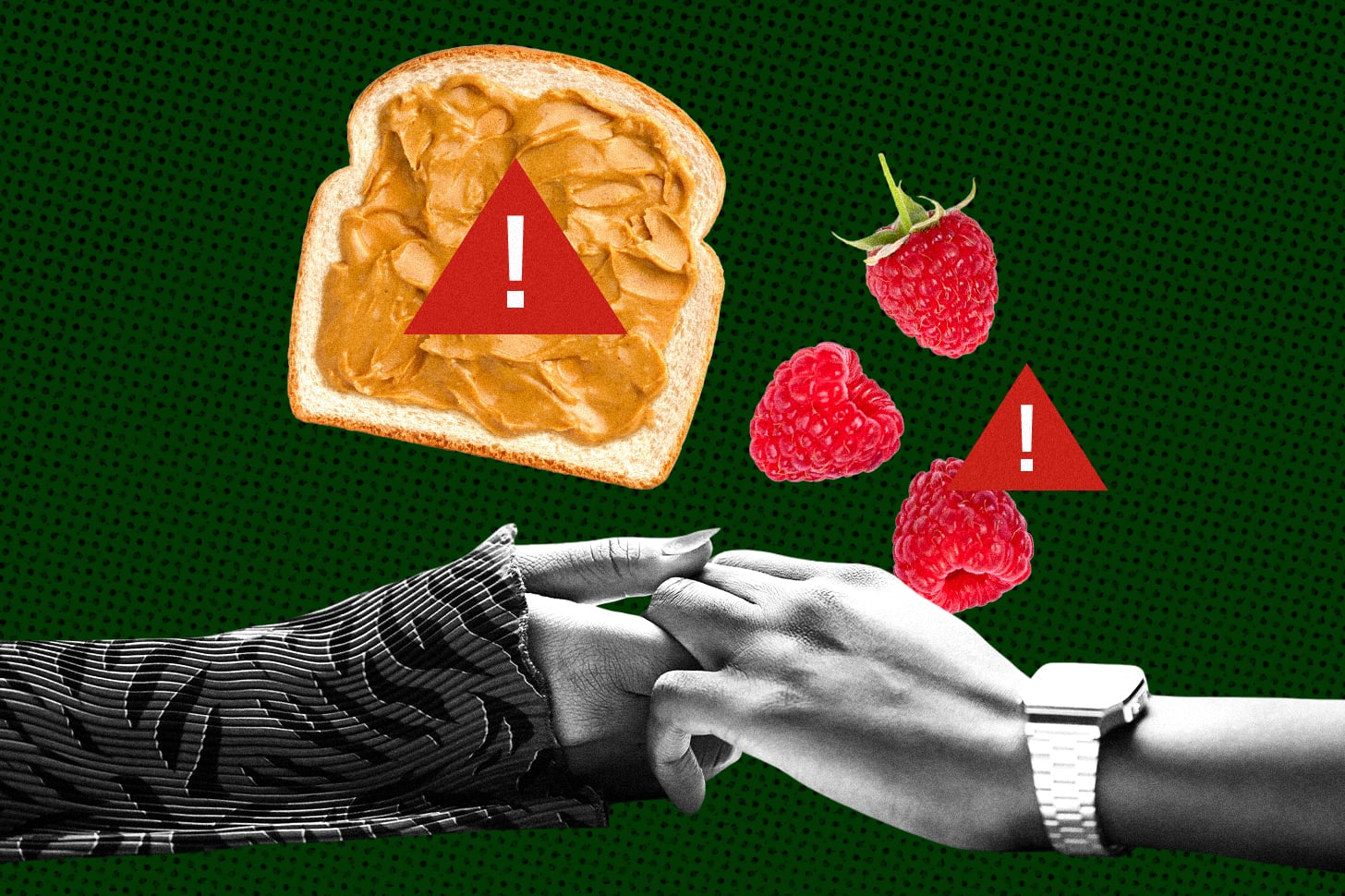
While Ziel's ex partner didn't pressure her to drop vegetarianism, some omnivores do have a hard time dating vegetarians or vegans, and vice versa. The same could be said for a lover of peanut butter dating someone with a nut allergy, or someone who keeps Kosher getting involved with a secular person. Nolan Cohn says that while it might get brushed off as plain stubbornness, it's not uncommon for people to genuinely struggle with the idea of a mismatch in their culinary preferences with partners.
Experts Featured in This Article
Marjorie Nolan Cohn, MS, RD, LDN, CEDRD-S, is the clinical director at Berry Street, a network of independent dietitians.
Vegan and vegetarian dating app Veggly surveyed its users in 2023 and found less than half would date a committed meat-eater, while 85 percent would date an omnivore who's "willing to transition to a plant-based diet but may need some help at the start." The very fact that there are vegan and vegetarian dating apps says a lot about the role of food preference in romantic relationships.
It can be dysregulating if your partner doesn't like or can't eat the same things you do, especially if you grew up in a culture or home environment where food was the gateway to connection. Nolan Cohn has had to navigate this discrepancy in her own life, because of her husband's severe IBS and dietary restrictions. She's learned to restructure that part of her day so that she can keep her husband healthy and safe but also feel like she's getting what she needs — not just nutritionally but emotionally.
When they eat together at home, Nolan Cohn and her husband will often cook a mild base meal that they can share and then prepare separate toppings for it, because he can't tolerate the seasonings she likes. For a lot of people, the emotion isn't always tied to specific foods, but to the experience surrounding them. "It's about spending time together" more than eating the exact same thing, Nolan Cohn explains.
"We think, 'Oh it's dinner time we need to eat the same meal,' because that's the traditional operating system we're on. But it is so normal for [my husband and me] to be eating different things now because it's more about being together," Nolan Cohn adds.
In her work as a dietitian, Nolan Cohn sees "a lot" of couples who come for therapy. "Understanding the other person's dietary needs in a more deep way, like how can we prepare a meal together that meets both of our needs, all of that will have an impact on intimacy," she says.
It might seem counterintuitive, but in her own marriage, Nolan Cohn saves her favorite foods for times she and her husband aren't together. "I'm showing my husband love by going out with my friends and enjoying Mexican food and all these other things I can't do with him," she says.
For those who equate food with love and nurturing — a very natural association — it might be painful to make that compromise. "If I wasn't a dietitian and knew how to navigate this process, it absolutely could have had a negative impact on our relationship," she says.
Anecdotally, Nolan Cohn says more couples are seeking medical nutrition therapy than she's ever seen — though plenty of people still aren't aware that it's an option for themselves as individuals, let alone their romantic partners. Most couples she sees are in the midst of a more serious medical complication, have just received a new allergy diagnosis, or are receiving treatment for eating disorders.
"Dietitians are like the new marriage therapists."
But couples nutrition therapy could be for anyone wanting to deepen their appreciation for their loved ones' eating habits, even if there's nothing medically "wrong." "We see this a lot at Berry Street, the intimacy that is built through the counseling process of learning about each other's food preferences and needs," she says. "More and more couples are coming in just for general wellness. Dietitians are like the new marriage therapists, there's so much overlap."
Couples sessions provide a space to assign the science to certain dietary preferences and needs, yes, but they are also about finding common ground, Nolan Cohn says. "You may not like tomatoes but will it bother you to even see a partner eat a tomato? You don't have to share preferences, but you have to share mutual respect."
Ziel's diet transformation for her then-partner is likely a more extreme approach than most are willing to take, but it captures the depth of emotion baked into meal time: I love you, so I want to eat like you. Some of the most underrated romantic gestures involve food — like trying something you previously thought you didn't like because it's your partner's favorite, or remembering to pick up a couple extra treats for them at the grocery store.
It's not always possible or practical to eat the same exact stuff as your partner, but sometimes, just taking the space to acknowledge the emotion behind certain foods goes a long way in deepening connection. "Navigating nutrition together is intimacy at its core," Nolan Cohn says. "Sharing food is a sixth love language if you think about it."
165578
Emma Glassman-Hughes (she/her) is a former associate editor at PS Balance. In her seven years as a reporter, her beats have spanned the lifestyle spectrum; she's covered arts and culture for The Boston Globe, sex and relationships for Cosmopolitan, and food, climate, and farming for Ambrook Research.Read on the original site
Open the publisher's page for the full experience