At Dior Cruise 2027, Jonathan Anderson Turned LACMA Into A Silver Screen Fantasy
Our take
At Dior Cruise 2027, Jonathan Anderson transformed the iconic Los Angeles County Museum of Art (LACMA) into a silver screen fantasy, seamlessly merging the allure of Old Hollywood with a contemporary gaze. This marked Anderson's inaugural Cruise collection as the creative director of Dior, an opportunity laden with expectation. The choice of location was not merely a backdrop; it was a nod to the brand's storied connection to Hollywood, a legacy that dates back to 1947 when the "New Look" first captivated film stars like Elizabeth Taylor and Marlene Dietrich. As we witness this intersection of past and present, it begs the question: how does nostalgia play into modern fashion narratives? This exploration is essential, as it reveals the emotional depth and cultural significance behind such grand spectacles, which is further underscored by the The Dior Cruise 2027 Show Was A Star-Studded Affair.
Anderson's vision for Dior is both ambitious and refined, echoing the soft confidence inherent in the brand's identity. By choosing the cinematic glamour of a bygone era, he taps into a collective yearning for elegance that transcends fleeting trends. The fashion industry often flirts with the concept of reinvention, but Anderson's approach feels more like a respectful homage to the past, expertly woven into contemporary aesthetics. This synthesis of eras not only honors the legacy of Dior but also invites a broader audience to engage with a narrative that feels both luxurious and accessible. The emotional resonance of this collection lies in its ability to evoke feelings of nostalgia while simultaneously positioning itself in the present—a delicate balance that speaks to the heart of modern femininity.
Moreover, the strategic decision to showcase this collection at a cultural landmark like LACMA indicates a thoughtful intention to elevate the conversation around fashion as an art form. The museum's architecture and the curated artworks surrounding the event serve as a poignant reminder that fashion is not just about garments but rather a powerful medium of self-expression and identity. This aligns beautifully with the ethos of Chiara Bransi, who embodies a lifestyle where luxury and self-awareness coexist harmoniously. The interplay of fashion and art offers an opportunity for deeper reflection on how we perceive beauty and style, urging us to consider not just what we wear but how it resonates with our inner selves.
As we look ahead, the implications of Anderson's debut collection extend beyond the immediate spectacle. They challenge us to think about the evolving role of fashion in our lives. Will this cinematic approach to design continue to influence future collections? Moreover, as we navigate a world increasingly driven by fast fashion, Anderson’s commitment to a more thoughtful, introspective design philosophy serves as a beacon of inspiration. The question that lingers is whether this trend towards emotional depth and historical reverence will inspire a broader shift in the industry, fostering a culture of intentional consumption and appreciation for the craft behind each piece. As we embrace this new chapter at Dior, it is a moment ripe for reflection and anticipation—one that invites us to reimagine our relationship with fashion as an enduring narrative of self-expression and creativity.
It was expected that Jonathan’s Anderson’s first Cruise collection as creative director of Dior would be a dreamy spectacle of epic proportions. Did industry insiders anticipate him taking his lofty vision to Los Angeles? Probably not at first. However, considering the brand’s historic stake in Hollywood, the West Coast pilgrimage is not a far-fetched notion. When hitting the scene with its “New Look” in the 1947, film stars like Elizabeth Taylor, Rita Hayworth, and Marlene Dietrich were some of the first to cosign the label’s glamorous aesthetic. Dietrich was even famously reported to insist on being dressed in Dior for Alfred Hitchcock’s Stage Fright, delivering the now-legendary ultimatum: “No Dior, no Dietrich.” For Dior’s Cruise 2027, Anderson referenced Dietrich’s no-famous devotion as well as the industry that put the brand on the map.
The designer set the scene from the jump on the chilly evening of May 13 at the Los Angeles County Museum of Art (LACMA), scattering classic Cadillac convertibles in sherbet colors around the outdoor runway, with dimly lit vintage lamp posts and subtle smoke machines creating a palpable film noir vibe. On each guest’s seat was a mock script for a project named “Wilshire Boulevard” tucked under cozy wool Dior blankets. Amidst the chatter of the excited attendees (which included Sabrina Carpenter, Miley Cyrus, and Mikey Madison) a background track of a director shouting instruction and the familiar boisterous sounds of a sound stage instantly transported you to a different time.
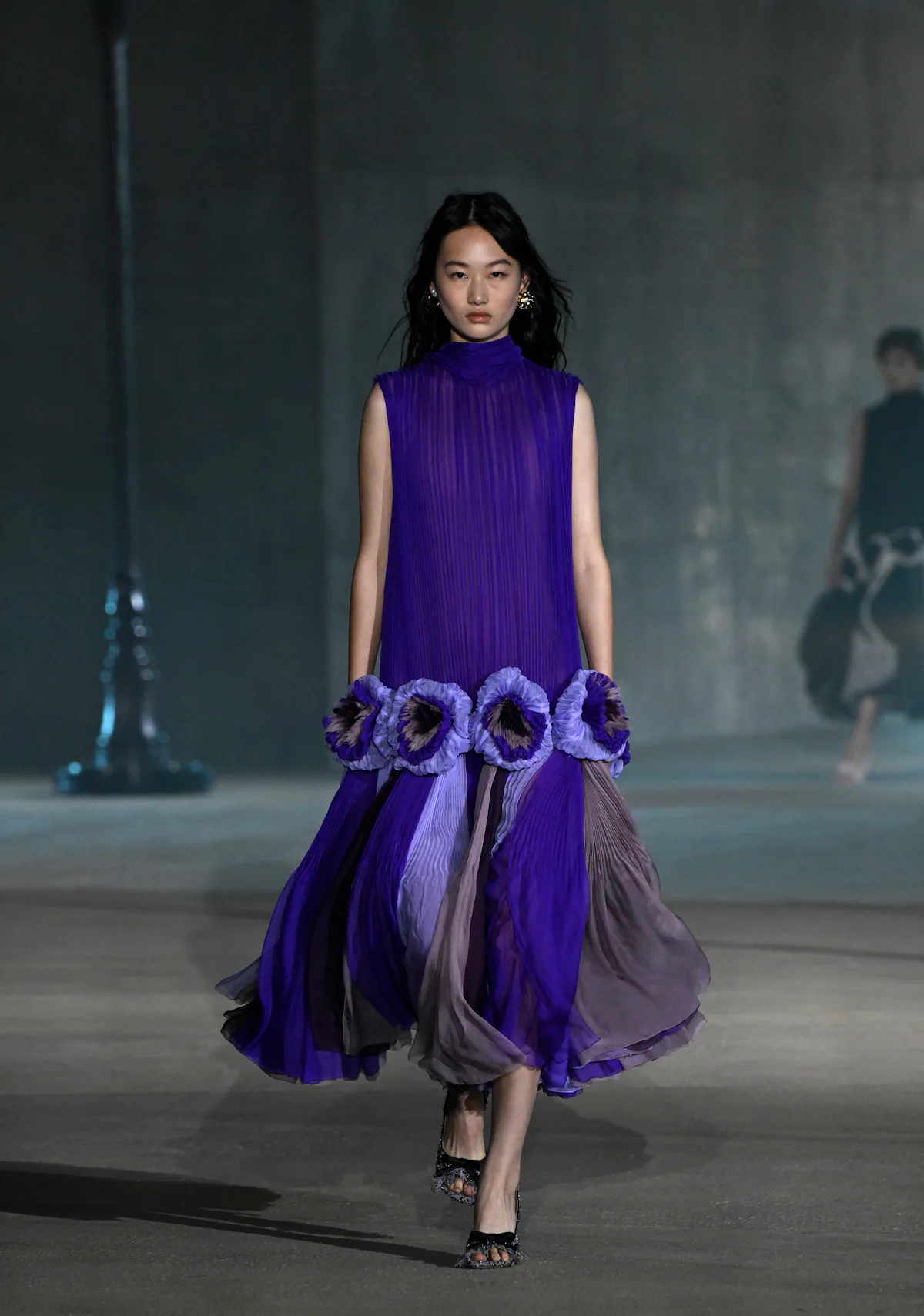
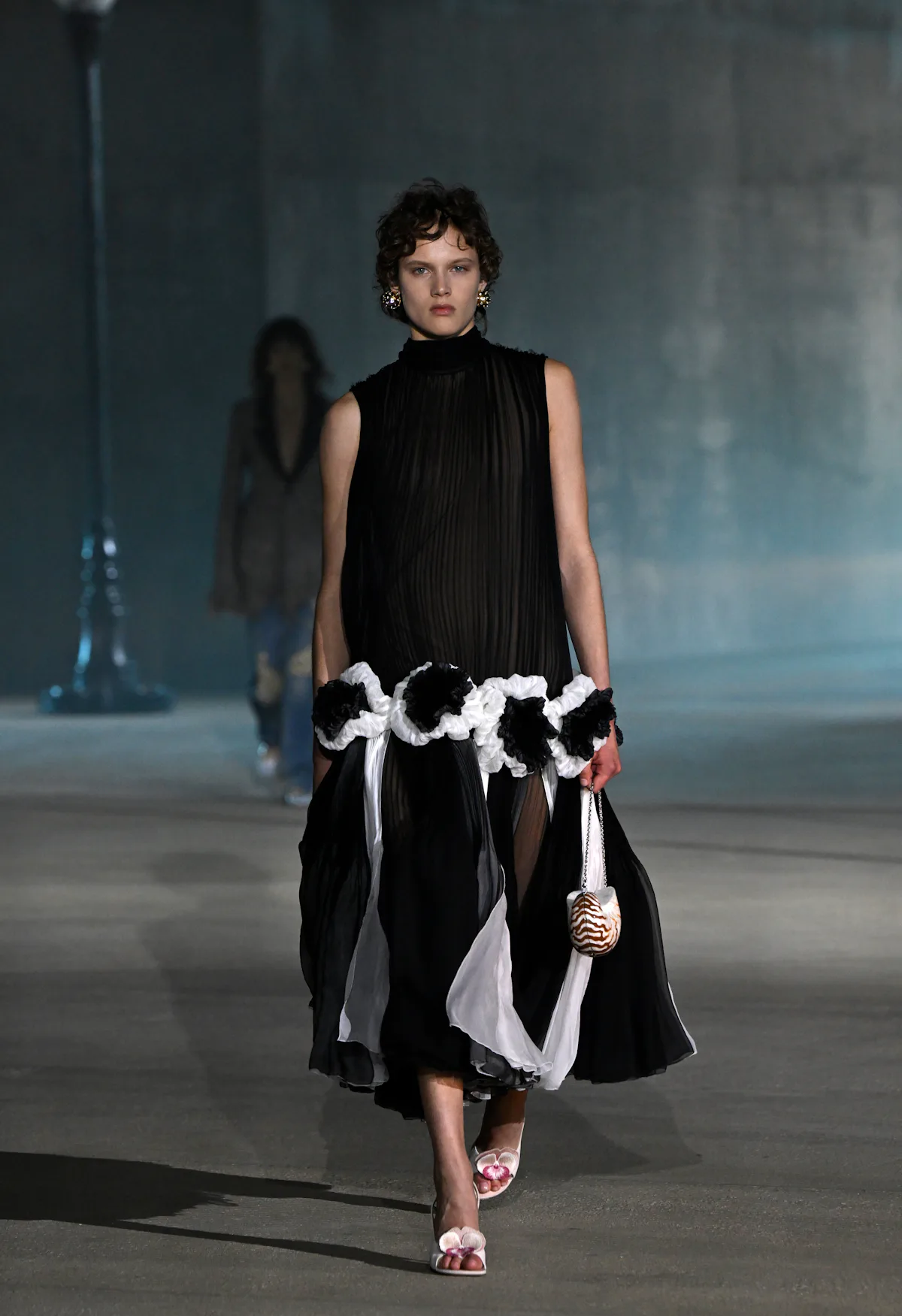
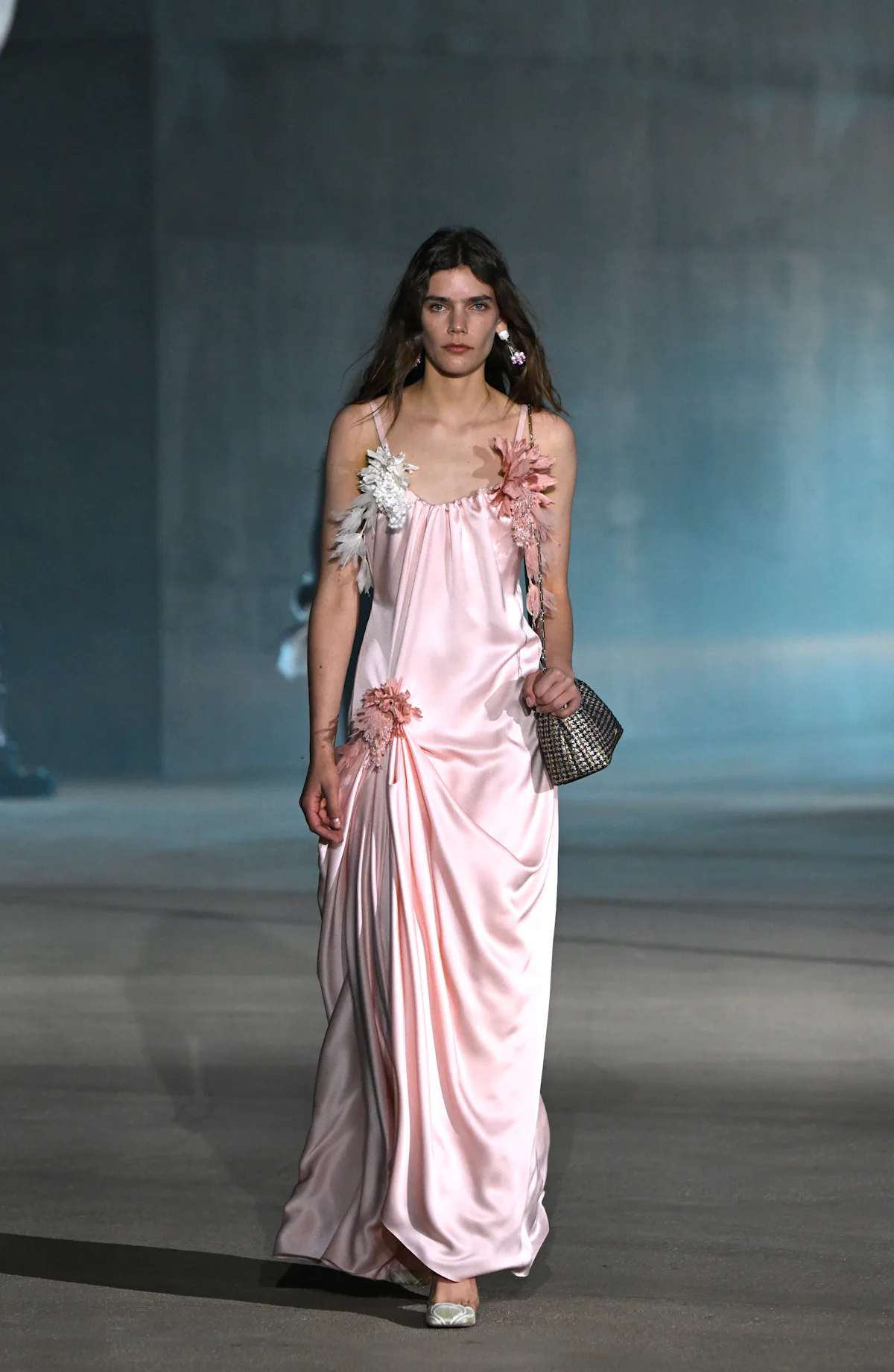
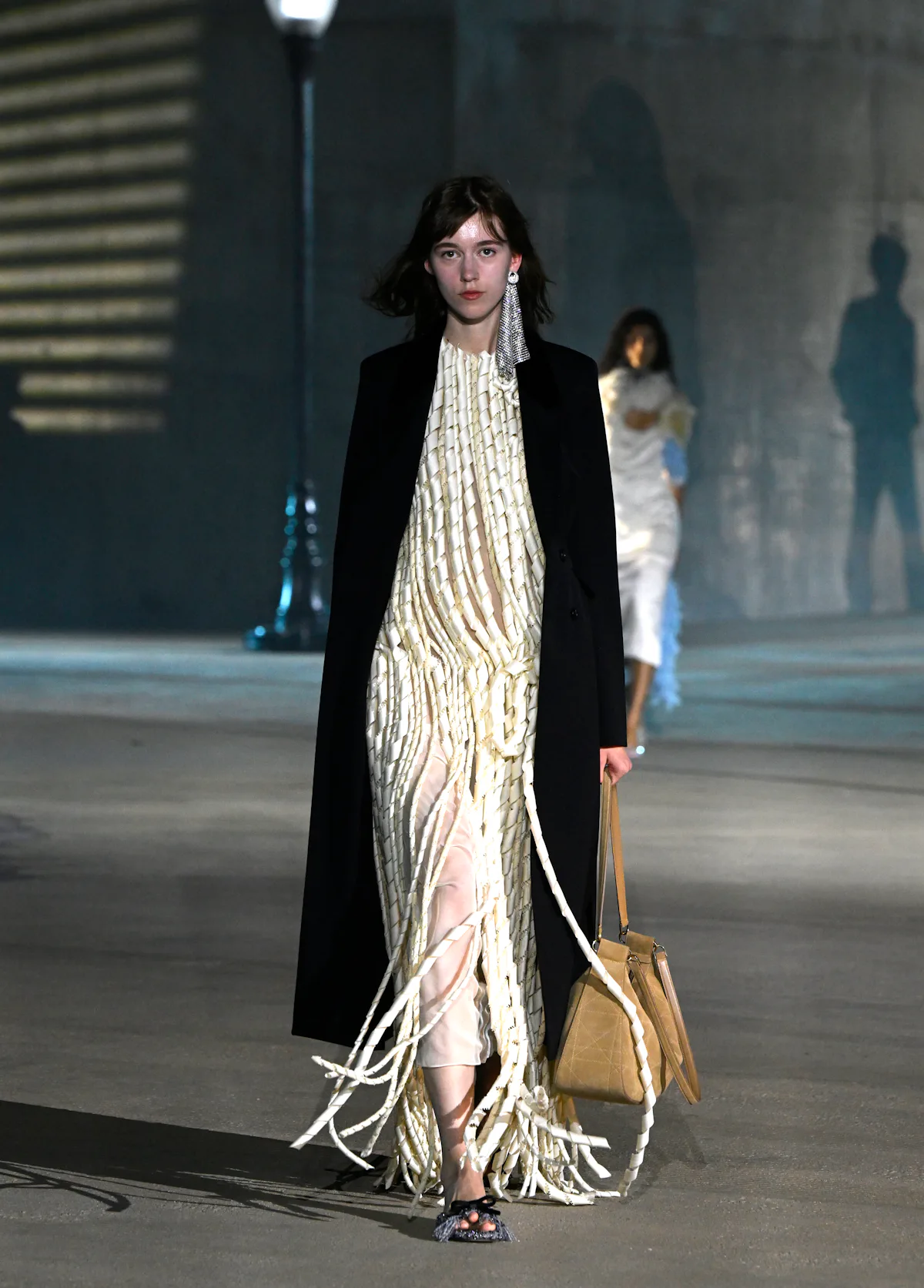
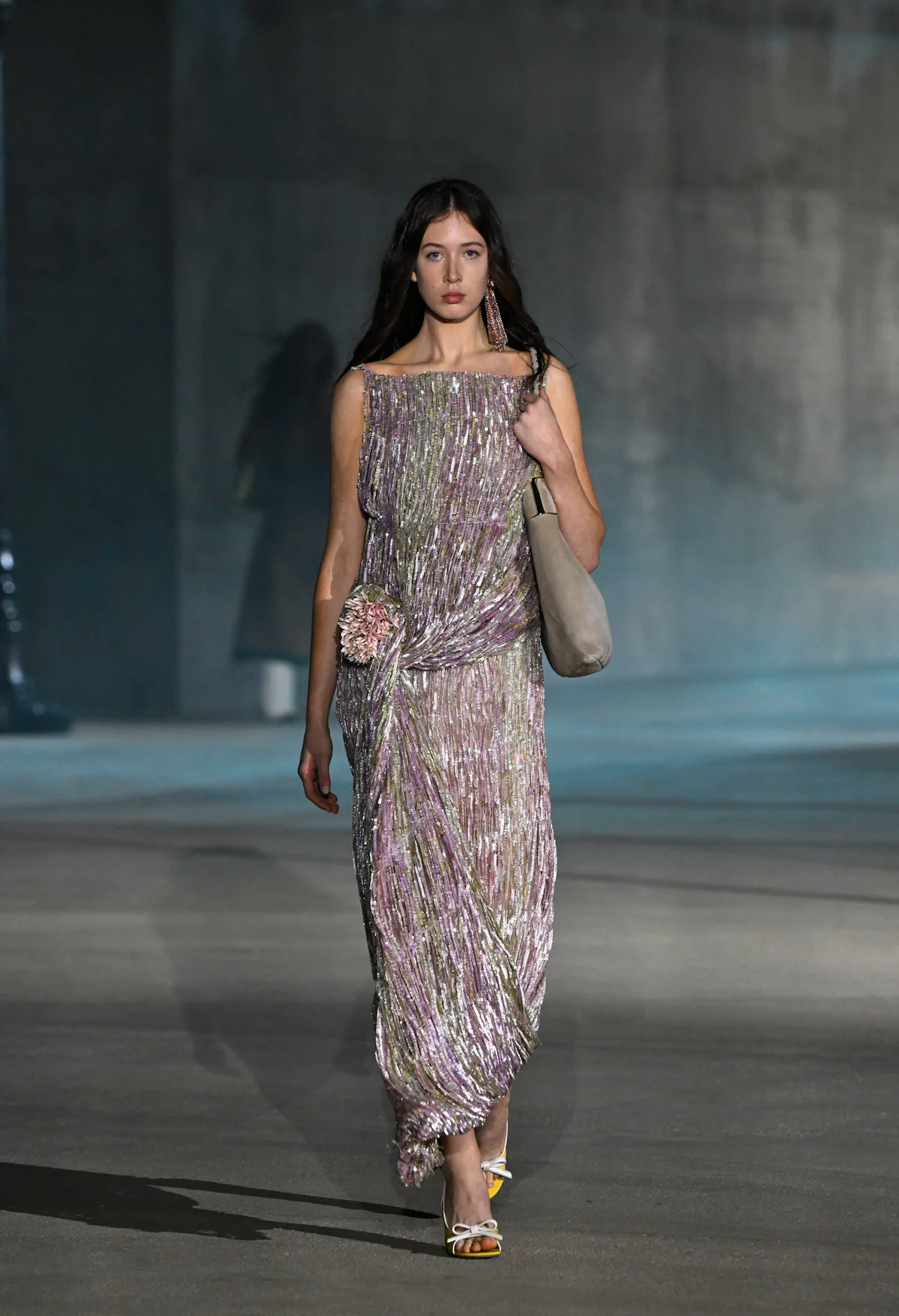
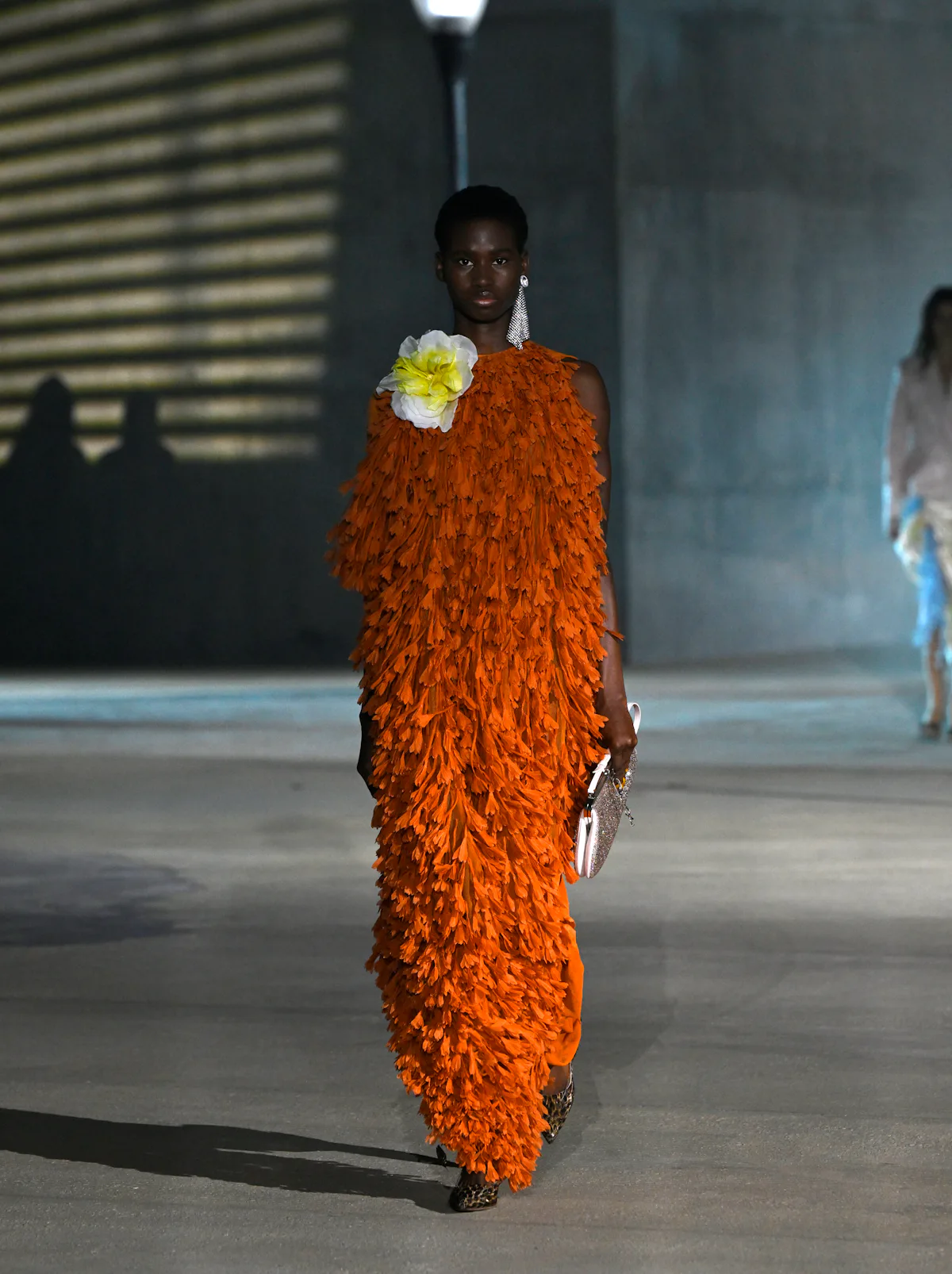
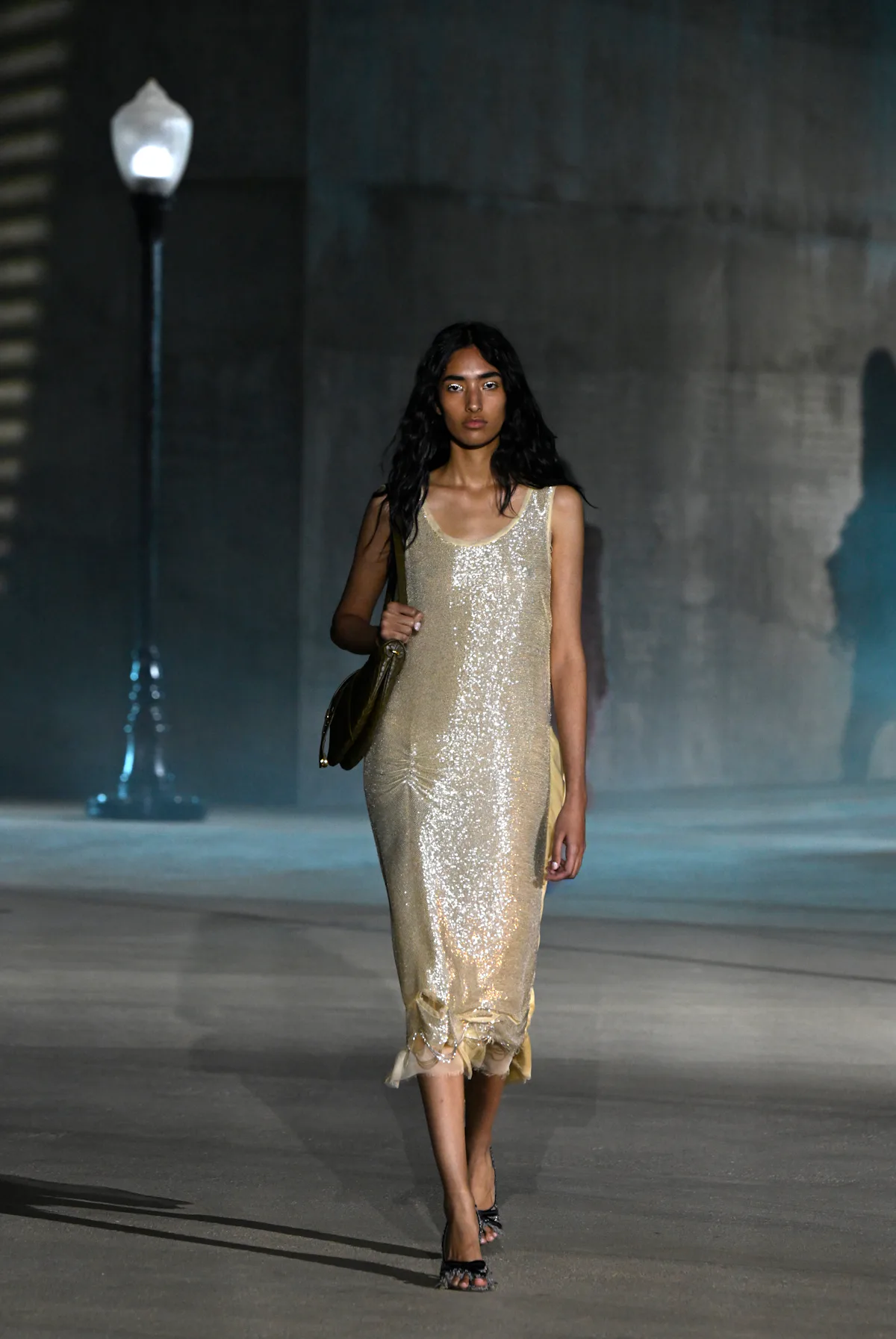
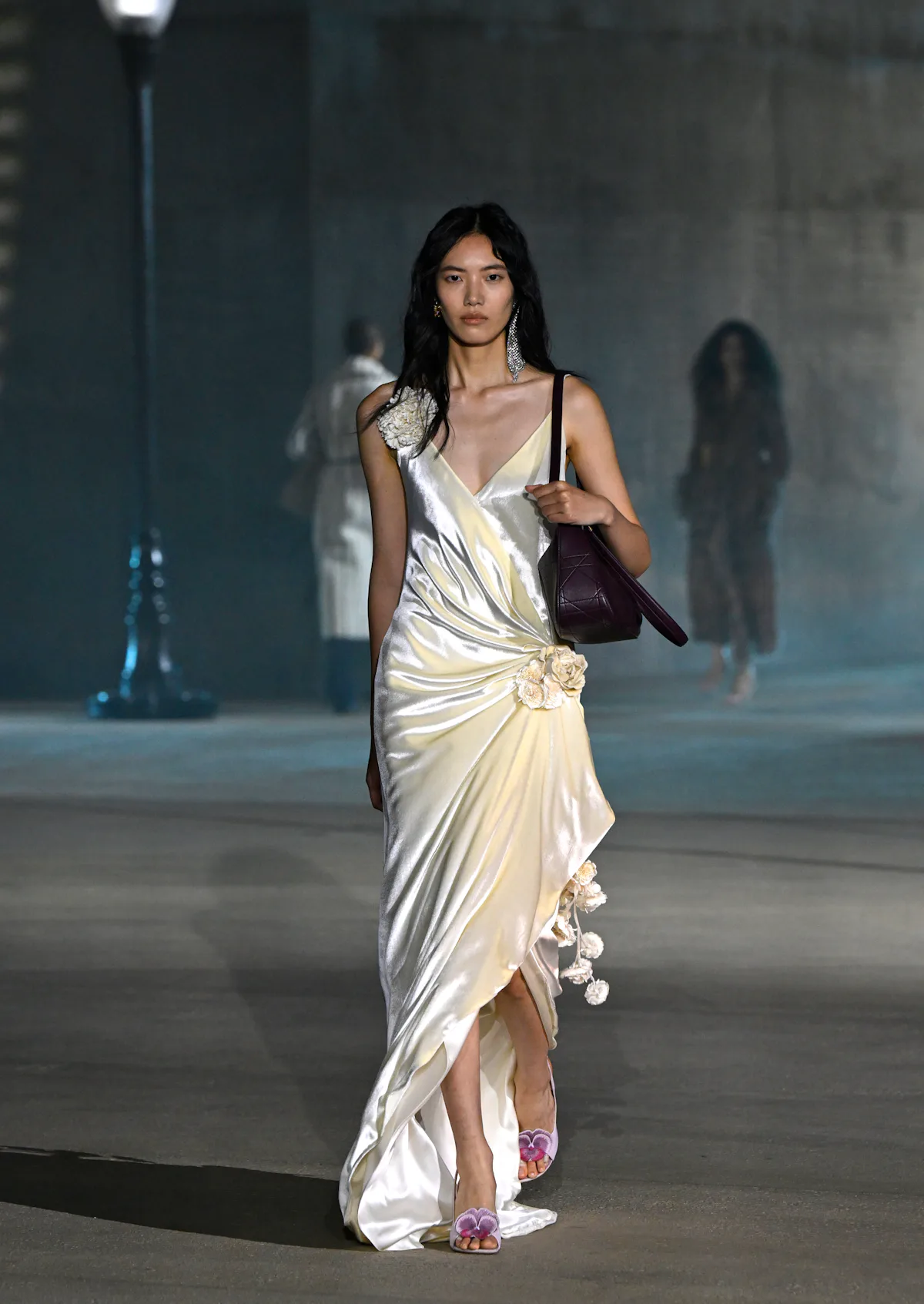
The runway commenced to the tune of croon-y 1940s love songs, with models emerging from the smoky path in romantic chiffon gowns with giant rosettes accenting the drop-waist silhouettes. Silky bias-cut slips — a nod to John Galliano’s iconic tenure — embellished with poppy heads read like items pulled directly from the wardrobes of Lana Turner or Sophia Loren. The reference to California’s signature flower was revisited in an even more dramatic fashion later in the show when Anderson sent models down the runway in luminous 3D orange creations that emulated poppy fields in full bloom.
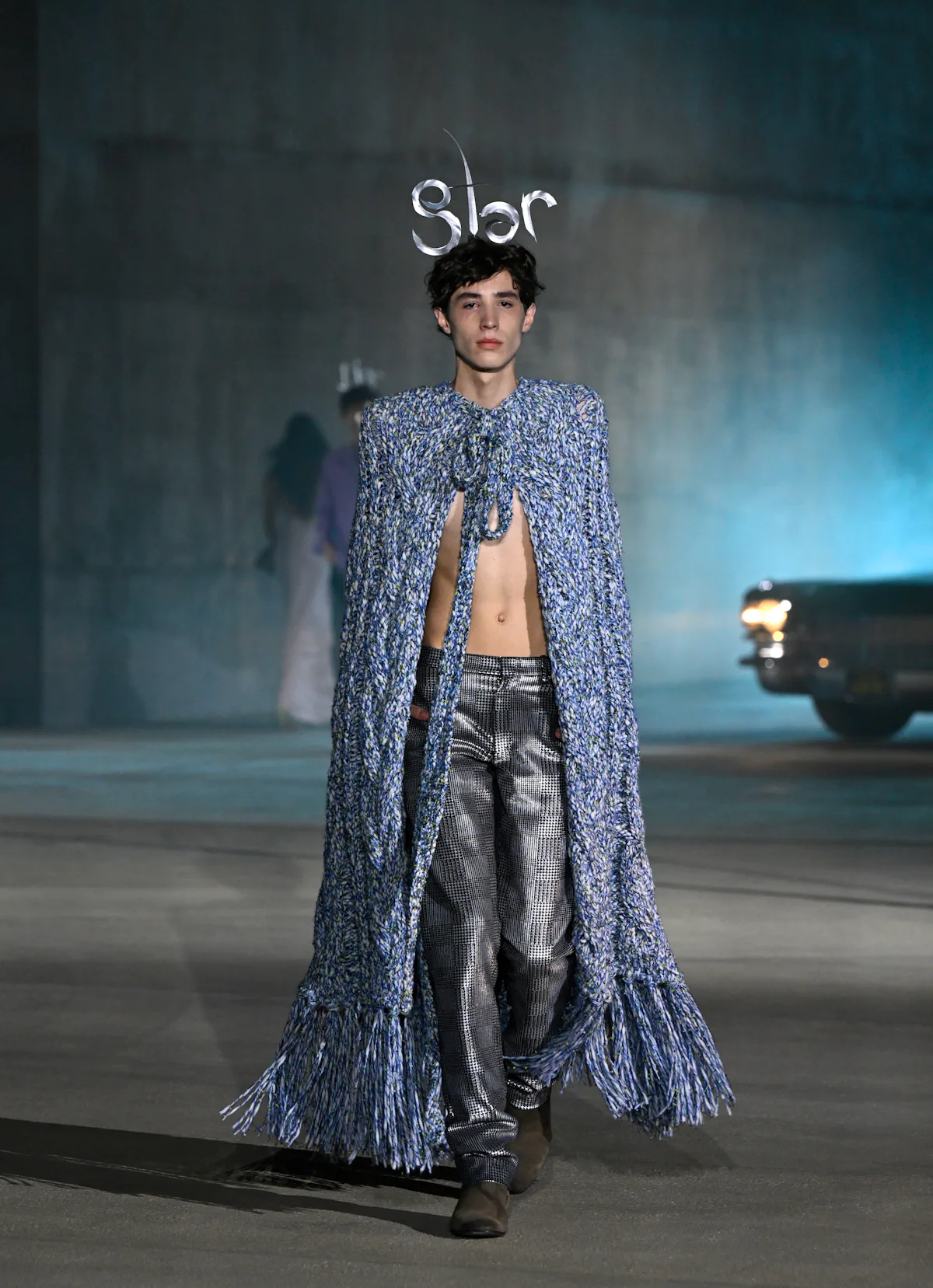
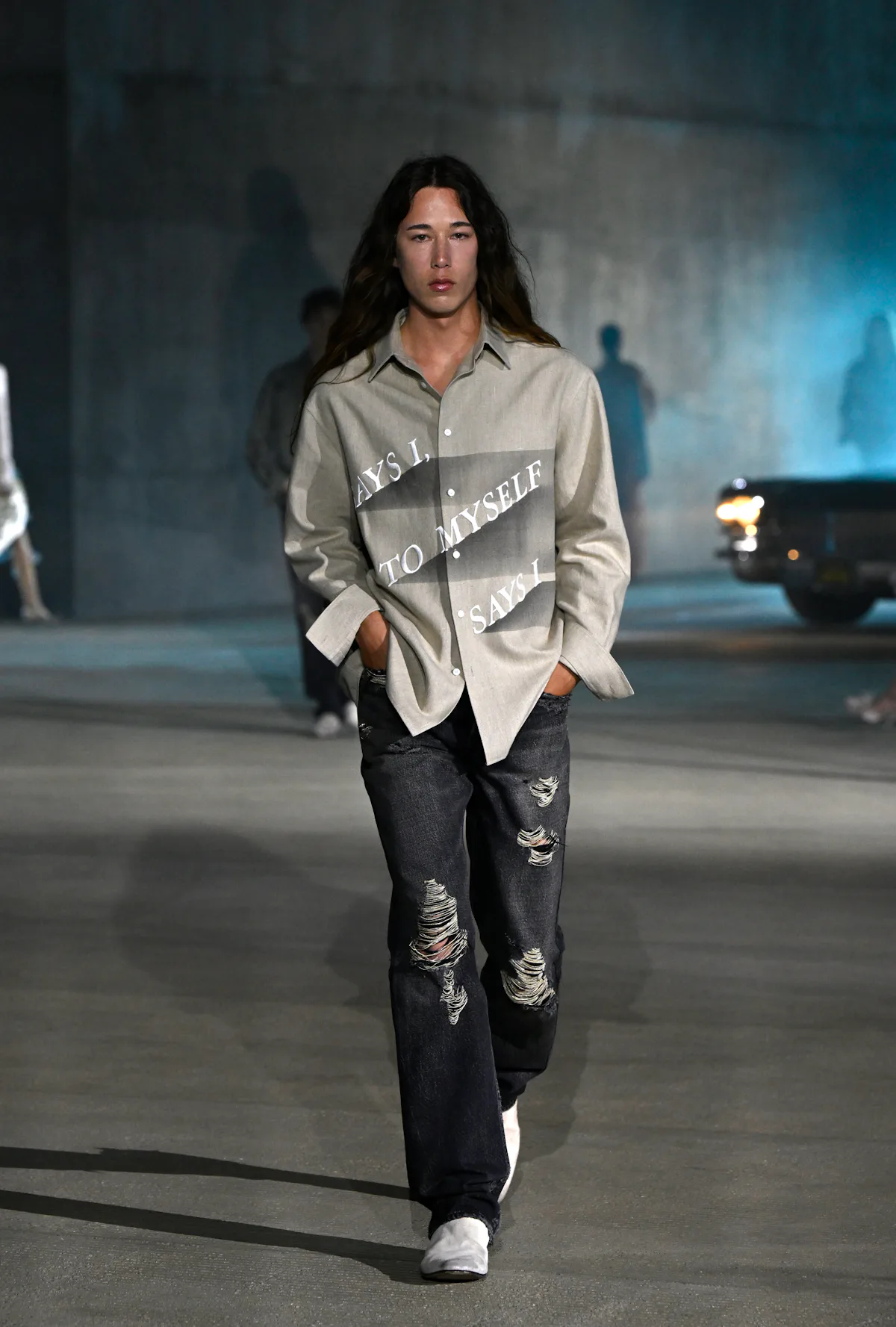
Slowly, the collection unveiled menswear, with feathered headpieces by Philip Treacy spelling out key words like “DIOR” and “STAR.” The accessories were a clear reference to the famous “BLOW” hat worn by English magazine editor and Treacy’s mentor Isabella Blow. “Working with Jonathan Anderson on these pieces felt like revisiting a part of my own history,” said Treacy in the show notes. Anderson also tapped artist Ed Ruscha to collaborate on shirts marked with Ruscha’s hallmark bold text. Think wool flannels stamped with “ONCE” and “Says I To Myself Says I” — the latter being a pop culture reference to the hit Netflix show Derry Girls, which takes place in Northern Ireland during The Troubles, a setting and time linked to Anderson’s own upbringing.
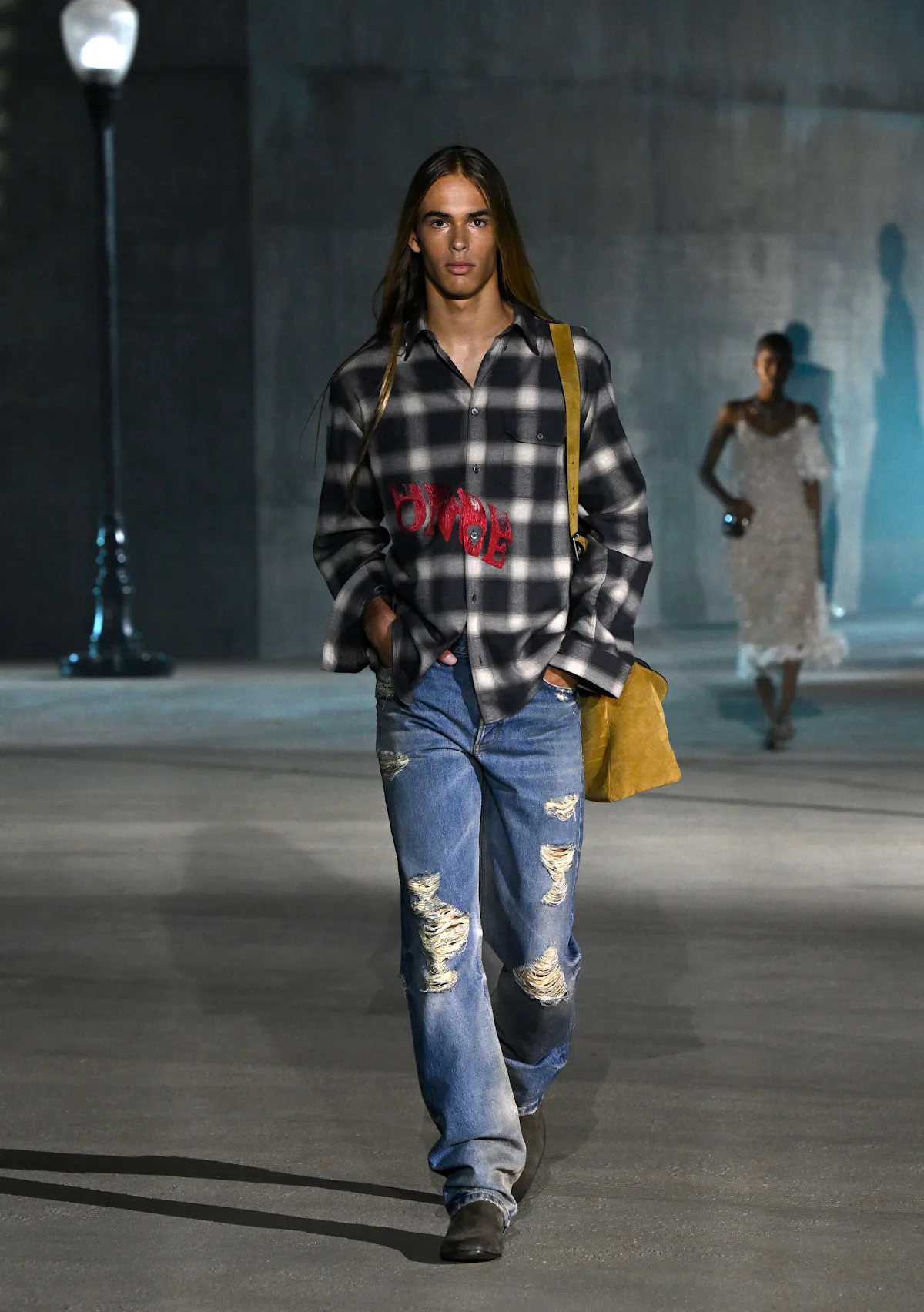
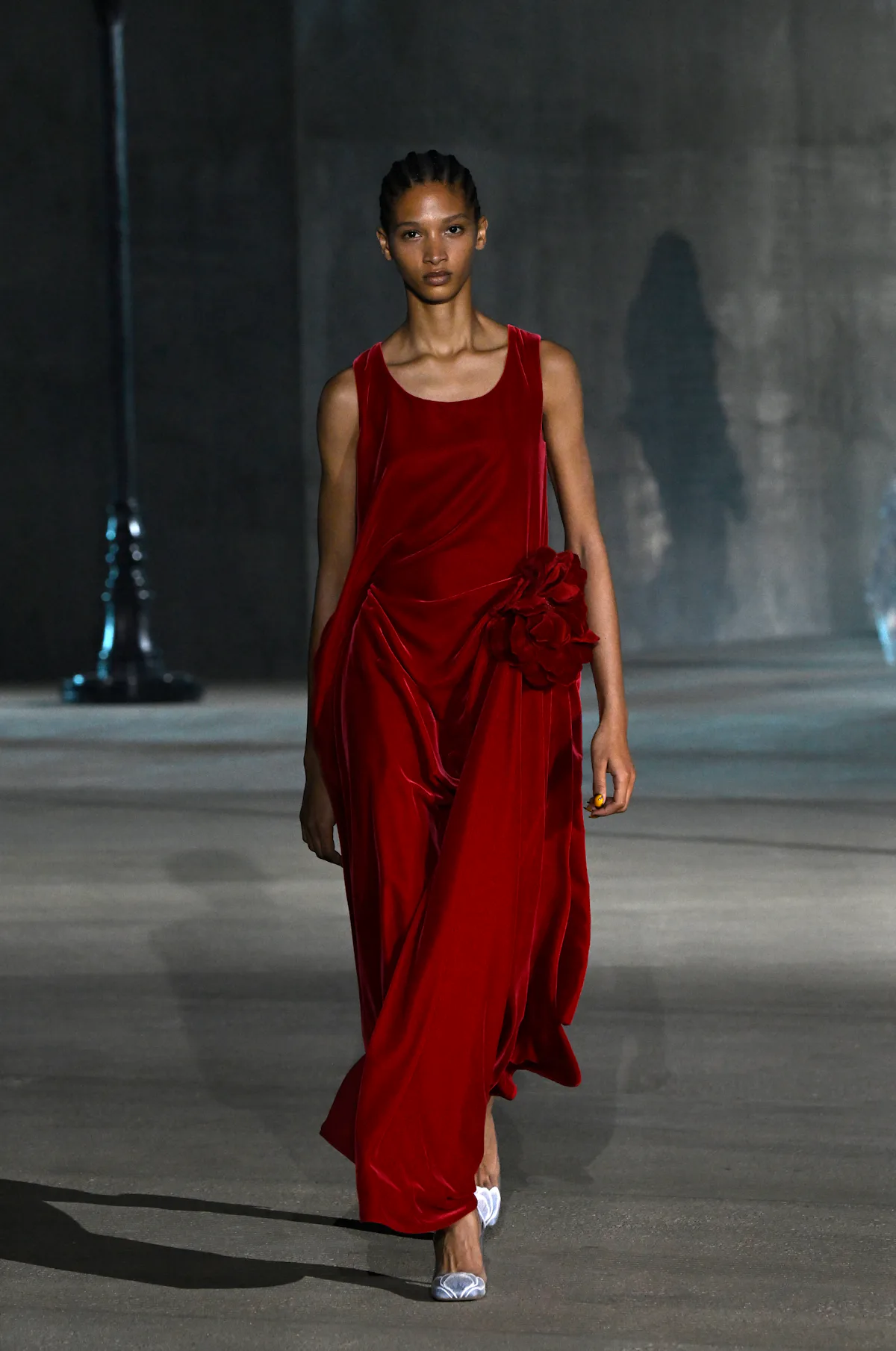
Following this decidedly more casual interlude of denim, flannel, and cheeky graphics, Anderson brought things back into focus with a rich crimson gown, a final and blatant reimagining of the classic red dresses made famous by starlets like Veronica Lake and Marilyn Monroe. “Christian Dior always put a red dress part way through his collections — simply to wake people up — a device I thought I’d experiment with.”
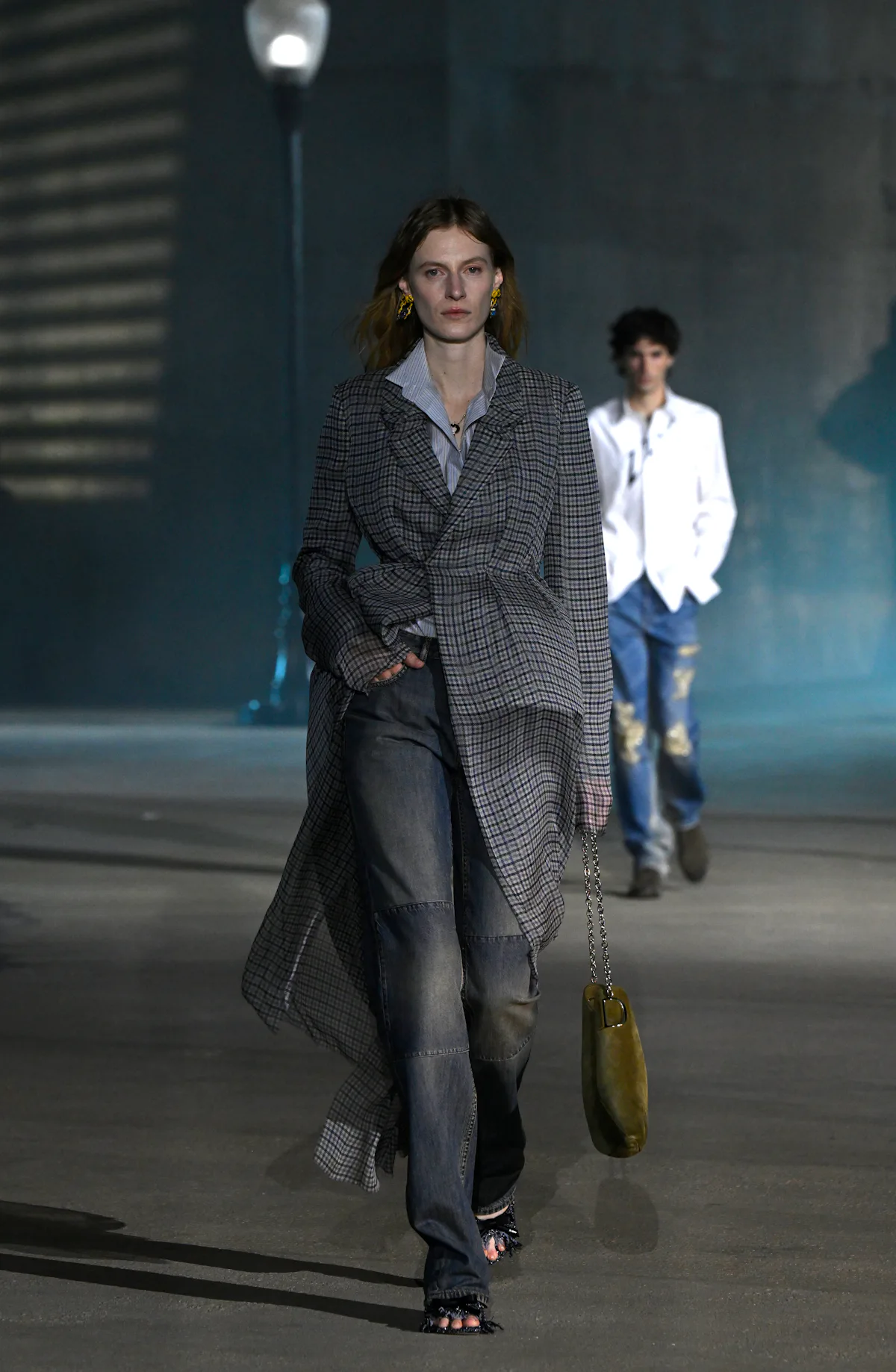
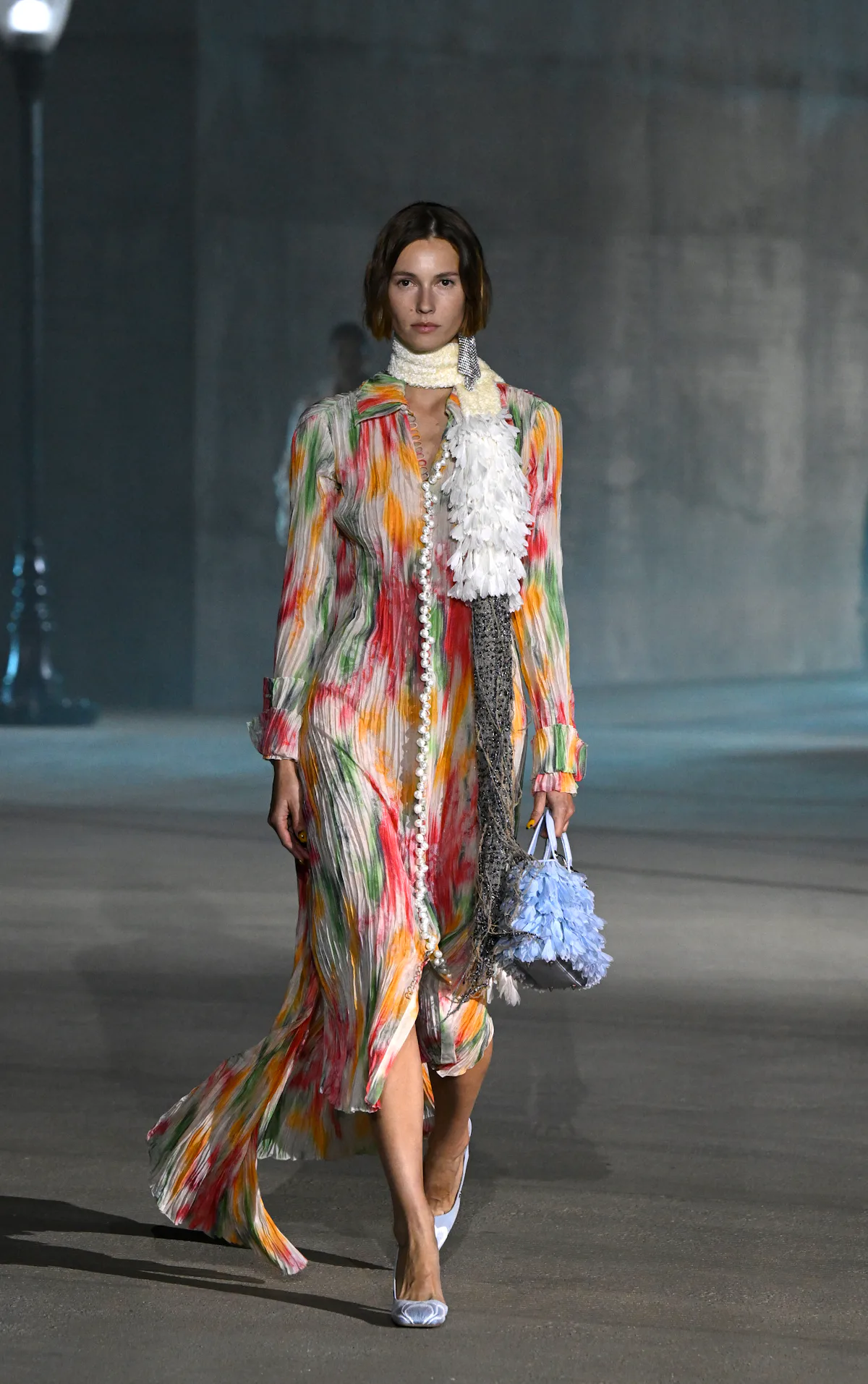
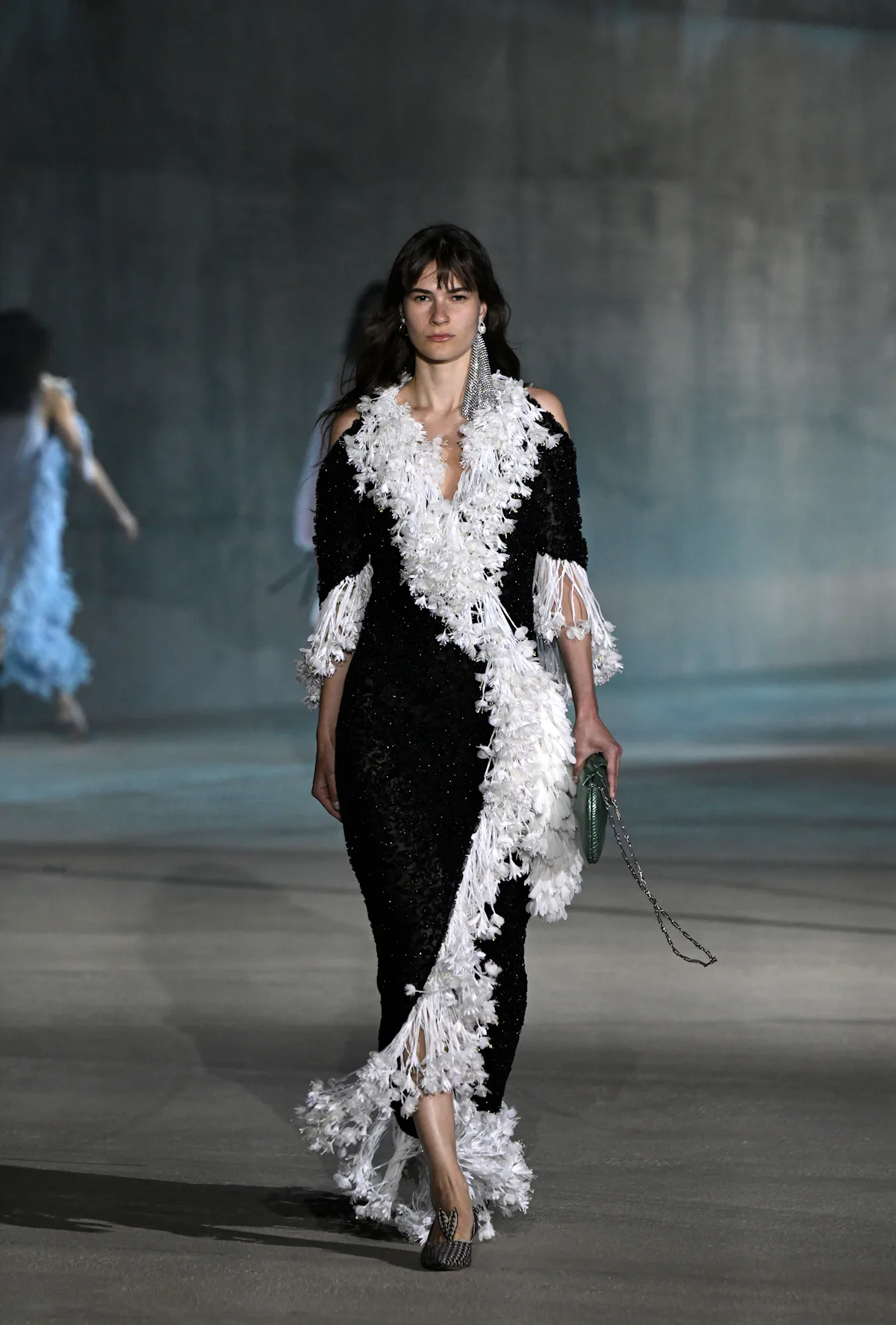
Below, the highlights from Anderson’s entire Hollywood “experiment” below, which is already proving to be a rousing success among insiders.
Read on the original site
Open the publisher's page for the full experience