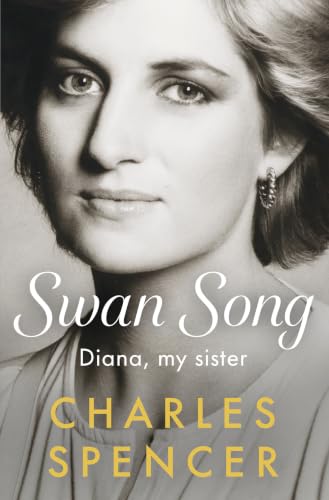
There is a particular kind of power that the world is trained to overlook: the quiet kind. Charles Spencer's account of his sister Diana's life within the monarchy, as shared with *Marie Claire*, confirms what many have long suspected, her softness was not a weakness but a threat. Her brother describes a "competitive" culture where her natural gravitation toward emotional connection and private grace was interpreted as a challenge to the established order. We see this as a profound lesson in the cost of being perceived. Diana's quiet power was not the absence of strength; it was strength in its most refined, unsettling form, and the institution around her did not know what to do with it.
This dynamic feels deeply familiar when placed beside the trajectory of her son. In Prince Harry chooses quiet distance over royal disruption, the same instinct surfaces: a deliberate withdrawal from the arena of loud conflict. Harry has no desire to create drama, choosing instead the quiet distance that his mother pioneered. It is a different strategy, perhaps born from watching her suffer for being misunderstood, but the root is identical. Both chose to protect their inner world rather than fight for approval in a system that rewards performance over authenticity. For our readers, this is the most arresting parallel: quiet power does not die with the person who carries it. It passes down, reshapes itself, and finds new forms of expression.
What Charles Spencer reveals is not merely a historical footnote but a mirror for anyone who has ever felt their gentleness mistaken for fragility. Diana's experience, as documented in The Loudest Shout How Diana Endured the Weight of Saturday Evenings, shows a woman who understood that the loudest voices in the room are not always the most powerful. She endured the weight of those evenings with a composure that was not passive but deliberate. Her brother's memoir reframes her legacy not as a tragedy of a woman who was too soft for the world, but as a study in how the world punishes those who refuse to harden. It asks us to reconsider what we call strength.
The practical takeaway is direct: true confidence does not need to announce itself. Diana's power was felt, not shouted. She did not campaign for recognition; she simply existed in her truth, and that was enough to destabilize a system built on performance. For our readers, the invitation is to stop apologizing for your quiet. The world may mistake your stillness for submission, but history, and this story, proves otherwise. The question that remains is whether we will learn from her example or continue to mistake volume for authority.