How Elle's Costume Designer Created the Perfect '90s Teen Version of Elle Woods
Our take
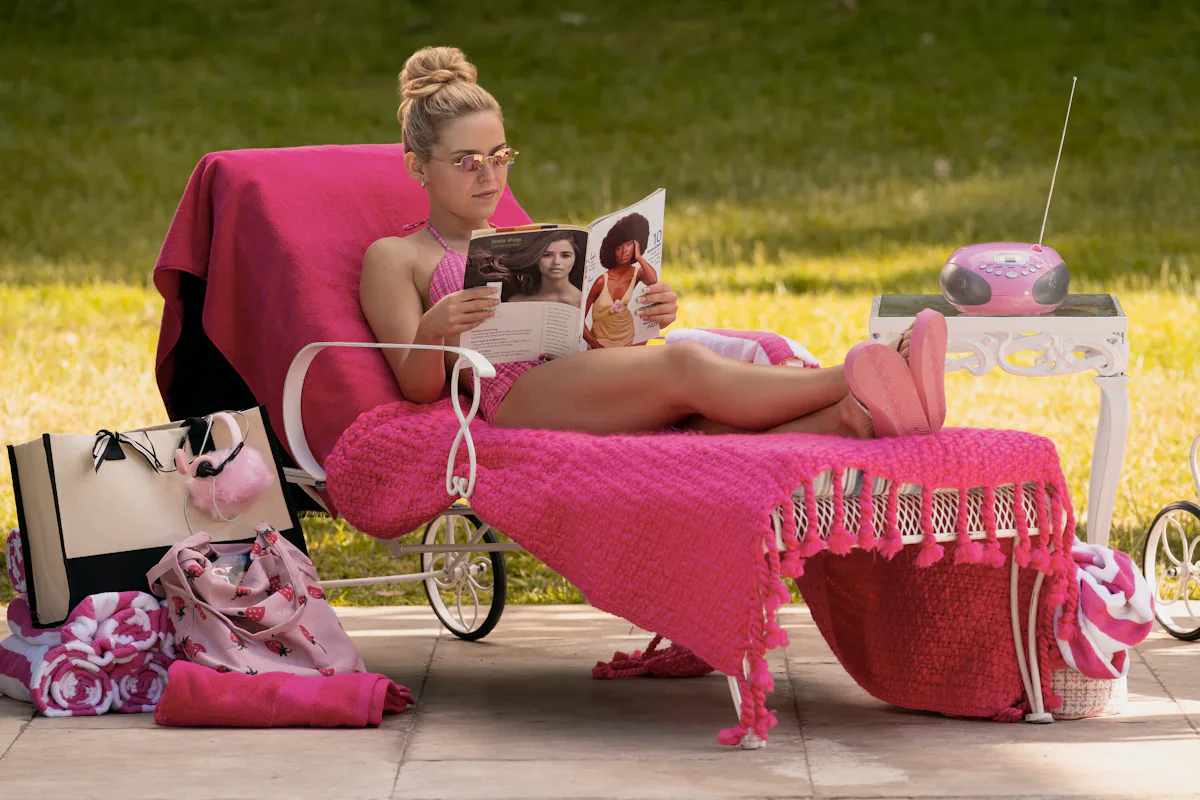
The resurgence of nostalgia is a relentless force in fashion and popular culture, and the recent Amazon Prime series *Elle* exemplifies this beautifully. Seeing Elle Woods reimagined for the 1990s isn’t just a fun exercise in retro styling; it’s a testament to the enduring power of the original film and its iconography. Costume designer Sara Byblow’s work in crafting this '90s Elle is particularly insightful, demonstrating a keen understanding of how to honor the character's essence while adapting it to a distinct era. The meticulous attention to detail – the specific cuts, fabrics, and overall aesthetic – speaks to a broader trend of revisiting beloved narratives and reinterpreting them through a contemporary lens, often with a sharper eye for authenticity. It’s a strategy that resonates with audiences who crave both familiarity and something fresh, a feeling echoed in recent trends like Hailey Bieber bringing back her flippy '90s lob Hailey Bieber Brought Back Her Flippy '90s Lob and the cyclical nature of fashion weeks constantly referencing past decades New York Fashion Week's Spring 2027 Schedule Is Here.
The brilliance of Byblow’s approach lies in capturing the essence of Elle’s personality – bubbly, optimistic, and unapologetically feminine – within the constraints of '90s fashion. It wasn't simply about replicating the pink outfits of the original film; it was about translating Elle’s confidence and playful spirit into the silhouettes and trends of the time. Think grunge-adjacent touches, perhaps a plaid skirt paired with a bright pink sweater, or a baby-doll dress with Doc Martens. This demonstrates a sophisticated understanding that nostalgia isn’t about literal replication, but about evoking a feeling and capturing a specific cultural moment. The original *Legally Blonde* offered a potent message of self-discovery and defying expectations, and seeing that message refracted through the lens of the '90s, a decade known for its own unique brand of self-expression and rebellion, creates a compelling and layered narrative. Moreover, the choice to focus on a younger Elle – pre-Harvard Law – allows for a deeper exploration of her character development and the roots of her unwavering self-belief. It’s a strategic move that allows the series to stand on its own while remaining true to the spirit of the original.
The success of *Elle* and Byblow’s costume design reflects a broader shift in how we consume and engage with nostalgia. Consumers aren't just looking for a quick hit of familiarity; they want a thoughtful, nuanced reinterpretation that respects the source material while offering something new. This demand extends beyond fashion and into broader cultural trends, from music revivals to the resurgence of '90s television shows. The careful curation of details – the specific accessories, the subtle nods to '90s pop culture – demonstrates a deep understanding of what resonates with audiences craving a sense of connection to the past, but also seeking something fresh and relevant. The casting of Jessica Brooks, and the overall aesthetic of the series, speaks to a desire for authenticity and a rejection of superficial recreations. It’s a visual language that prioritizes mood and atmosphere, much like the understated elegance we champion, rather than overt displays of wealth or trendiness. The careful consideration given to the styling builds upon the ongoing exploration of identity within fashion, as exemplified by models like Moses Martin making his debut in Burberry’s summer campaign Moses Martin Makes Modeling Debut In Burberry's Summer Campaign, further demonstrating how fashion can be a powerful tool for self-expression.
Looking ahead, it will be fascinating to observe how this approach to reimagining beloved characters and stories continues to evolve. Will we see more '90s revivals, or will the focus shift to other decades? More importantly, how will creators balance the desire for nostalgia with the need to create content that is genuinely fresh and engaging for a modern audience? The success of *Elle* suggests that the key lies in a deep understanding of the source material, a keen eye for detail, and a willingness to embrace the nuances of the past while remaining firmly rooted in the present. The challenge, then, isn't simply to recreate the past, but to understand *why* it resonates with us and how those lessons can inform the stories we tell today.
There are certain movies that enter your fashion psyche and stay there forever, and Legally Blonde is one of them. When Reese Witherspoon’s Elle Woods walked into Harvard Law School in her pink leather outfit with her Chihuahua, Bruiser, tucked under her arm, there was a cultural shift. Yes, it was a comedy about a bubbly sorority girl trying to prove herself as a serious law student, but it was also a love letter to the power of owning exactly who you are — and a huge part of that was the clothes. Costume designer Sophie de Rakoff built Elle’s personal style so precisely that everything she wore, from her sequined bikini to her pink Playboy bunny outfit, became as recognizable as the character herself.
Now, 25 years later, Prime Video is going back to the beginning with Elle, which premieres July 1. The prequel series stars Lexi Minetree as a 16-year-old Elle Woods who, after her plastic surgeon father’s scandal forces the family to lie low, is freshly transplanted from her luxe Bel-Air life to grunge-era Seattle. Minetree inhabits the role with an almost eerie accuracy. The mannerisms and cadence in her speech (not to mention how well she pulls off pink) totally make you forget she isn’t Reese Witherspoon. Costume designer Sara Byblow had the job of building Elle’s origin story while honoring everything de Rakoff established back in the early aughts.
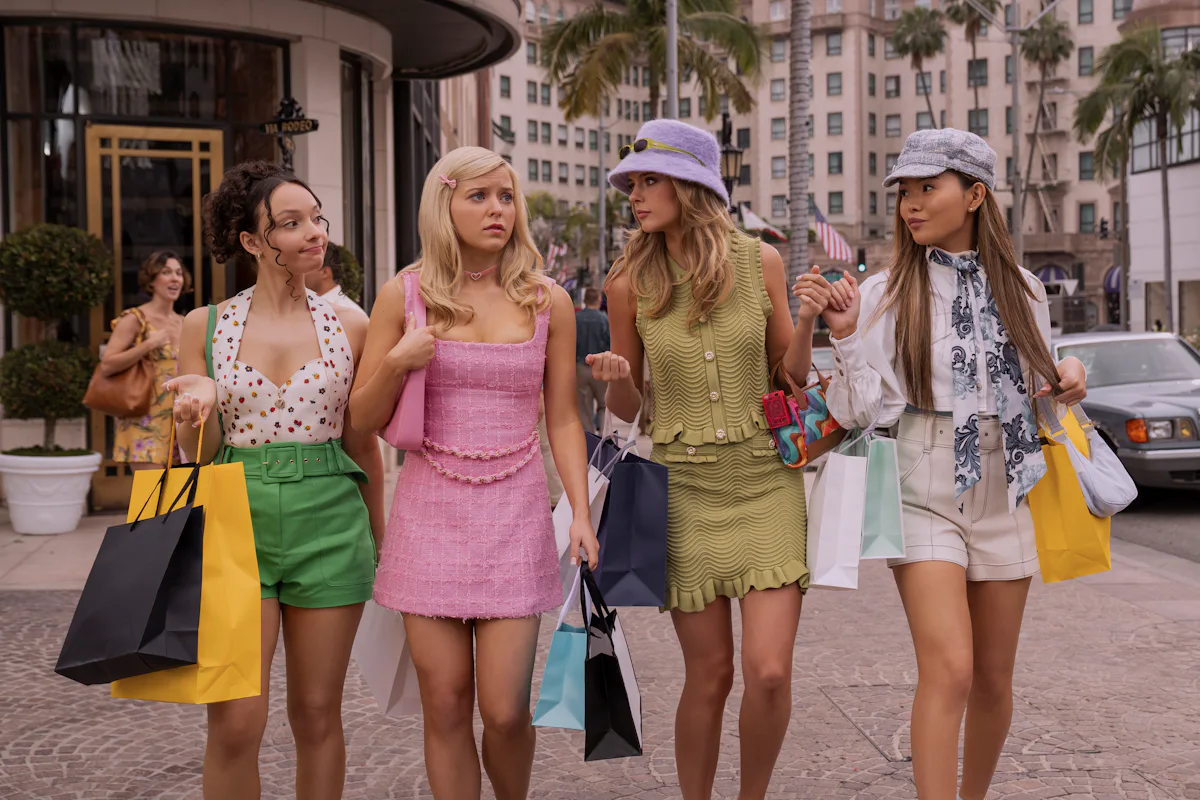
“This was such a rarity that we got to see ‘future her’ and kind of build backward,” Byblow tells The Zoe Report. Fortunately, she had an extraordinary resource at her disposal: the woman who built Elle’s wardrobe in the first place. “We had two weeks together in LA, which was amazing,” Byblow says of her collaboration with de Rakoff. “It was literally her and I in a room together, just sketching like crazy and talking about where her brain was with the first two movies,” she says. “It was great because we kind of were able to build out the world together.”
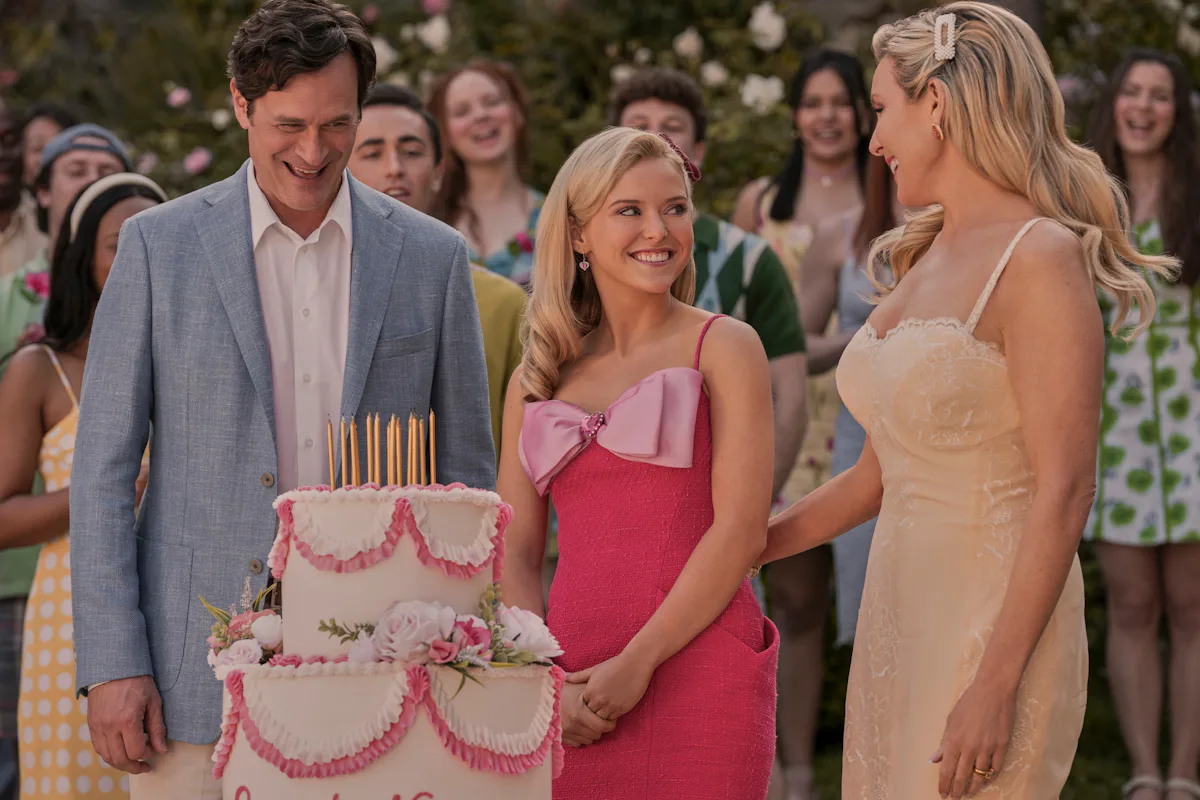
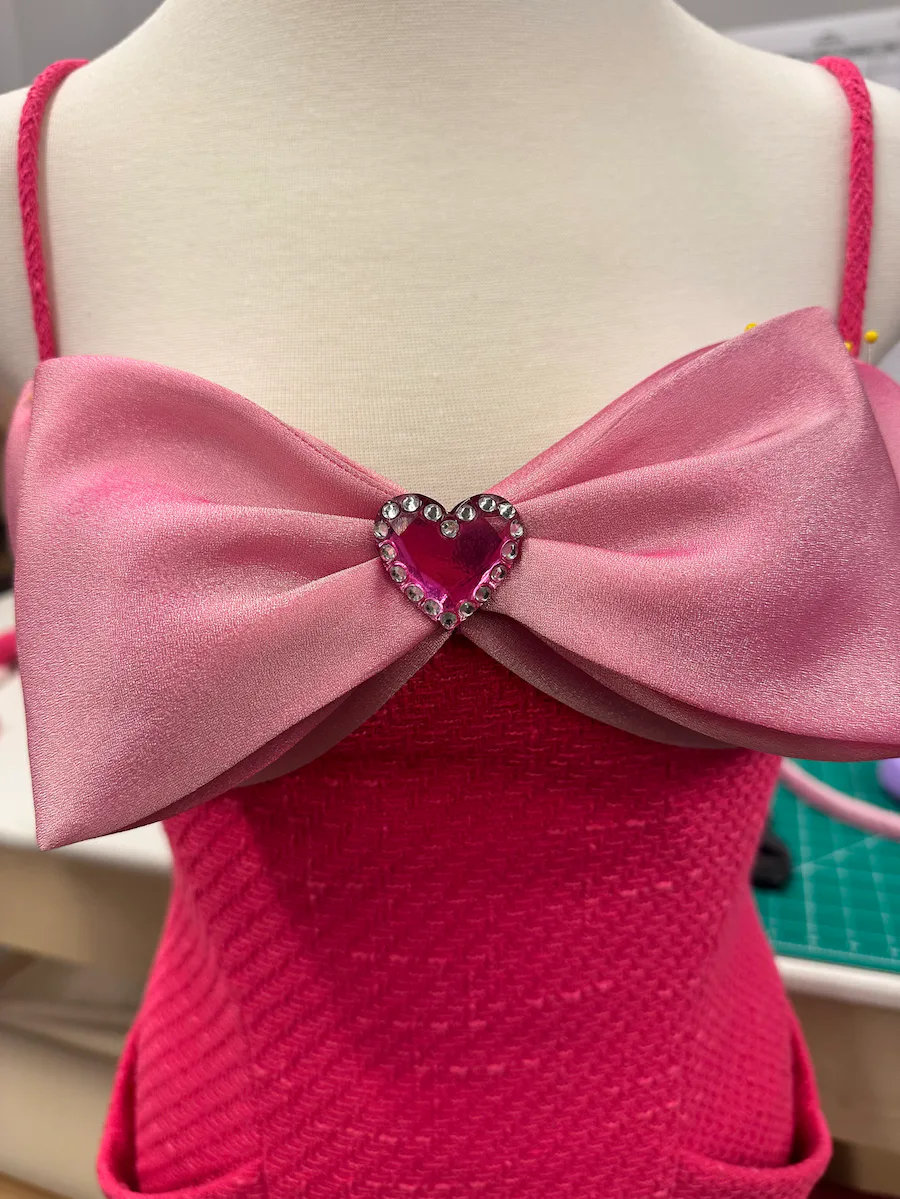
The two of them designed the first major piece of the new show together: the “Sweet 16” party dress that Elle wears in the first episode. “That was our really sweet moment of passing the torch of Elle Woods,” says Byblow. The pink tweed minidress, as it turns out, required an almost absurd level of devotion. Byblow and her team hand-dyed multiple fabrics for the oversize bow in the center of the dress, trying to find exactly the right weight and color, and built a cast for its rhinestone heart detail and the ones on its matching shoes.
For all the labor it required, the dress was also the easiest decision the team ever made. When they brought in five different designs for the producing team to review (which included Witherspoon), every single person in the room pointed to the same one simultaneously. “It’s nice that we were all very much on the same page for what we want the visual to be for the show,” she says. “I feel like you don’t always have that, and sometimes you’re kind of questioning yourself, but this show’s just been the most collaborative in that sense.”
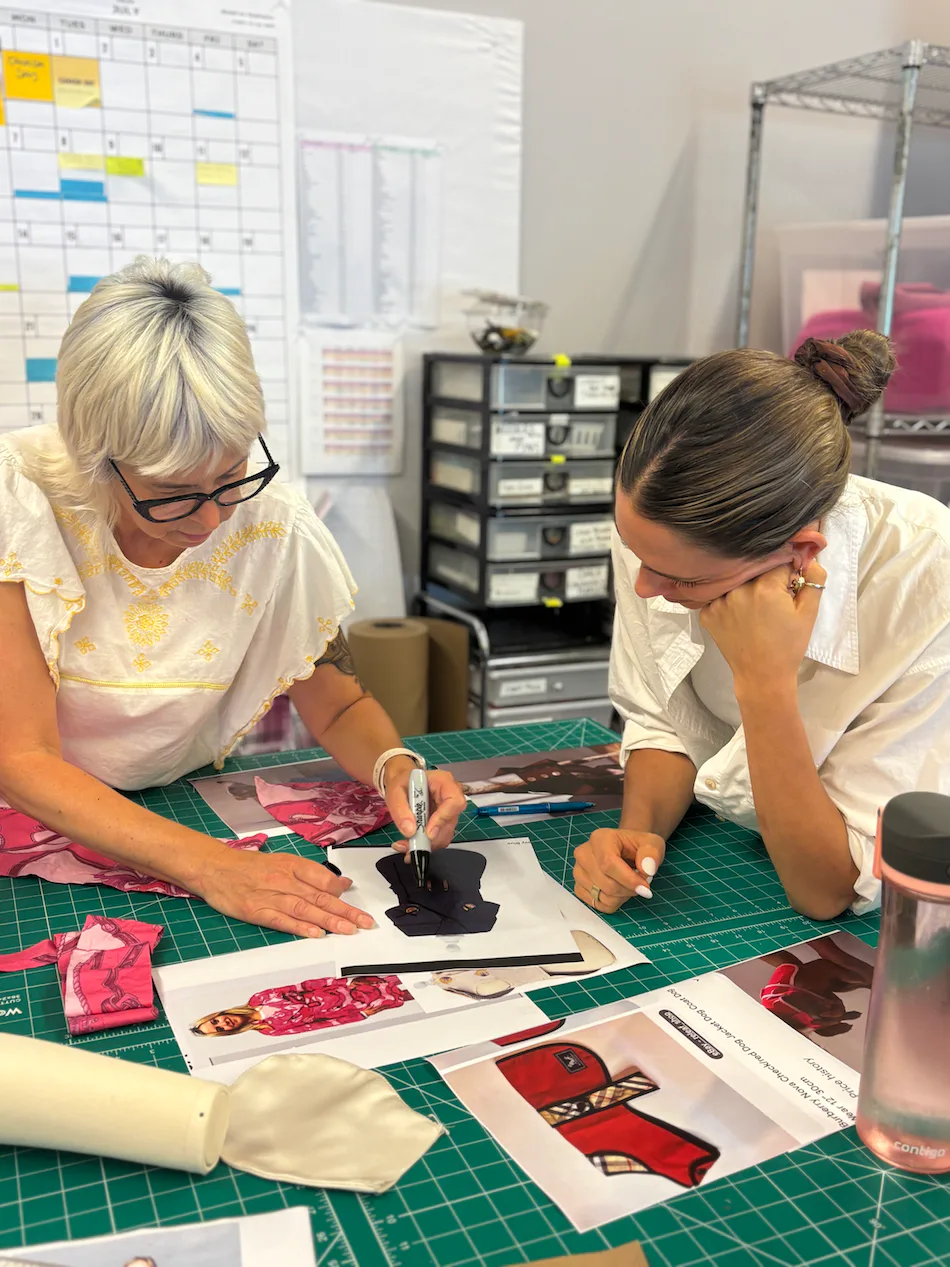
Byblow’s mood board for Elle is, frankly, a dream for any archival or vintage fashion nerd. “The ’90s are the best era for clothing, in my mind,” she says. “Supermodels literally ruled the world.” Byblow and her team printed out every runway collection from 1992 to 1995 and searched for any magazine they could get their hands on. They also pored over yearbooks from both Beverly Hills and Seattle high schools from the era so they could “actually see what kids were legitimately wearing at the time.”
One inspiration was, naturally, the pink houndstooth from Alaïa’s 1991 Tati collection. Princess Diana became the direct reference for Eva, Elle’s mother, played by June Diane Raphael. (I told Byblow I’d clocked the Tommy Hilfiger sweatshirt-and-bike-shorts look immediately while watching.) “We literally referred to that as the Princess Di look,” she says, laughing. “Anytime we were talking about it in alterations, we’d be like, ‘Is the Princess Di look done? So yeah, one thousand percent that’s where that one came from.” Even Brigitte Bardot made it onto the board — not for the era, of course, but for the bows, that ultra-femme sensibility that runs through Elle’s entire aesthetic.
But the single most important image on Byblow’s mood board wasn’t a magazine tear sheet or a runway still. It was a video. In 1993, Vivienne Westwood sent Naomi Campbell down the runway in a pair of towering platform shoes called the Super Elevated Ghillies, and Campbell famously fell. “The entire world gasped, and she got back up, and she finished the show with a smile on her face,” says Byblow. “That was a moment for me where I was like, this is the core of Elle Woods. She is the person who’s going to get back up and finish what she starts.” For the show’s finale, Byblow found a hot-pink Vivienne Westwood — a newer dress in a silhouette similar to those fabulous ’90s designs — and put Elle in it. “What says ’90s more than Vivienne Westwood?” she says. “And what says Elle Woods more than hot pink?”
The grunge side of the show’s costume design got the same level of obsessive attention. Kimberly, Elle’s school nemesis, wears a tee from Bam Bam, a Seattle band fronted by Tina Bell — one of the first women of color in grunge music and widely considered the godmother of the genre. “For the people who lived through the ’90s, they would look at the show and be like, ‘I know that band,’” says Byblow.
When it came to sourcing, Byblow says there was “so, so, so much thrifting,” and her team shopped all over the world, with a buyer specifically allocated to online archive hunting full-time. “I will send her a photo of something that I want, and I don’t know how she does it, but she goes on a mission,” Byblow says. Many pieces were reworked and recut. “There’s something really beautiful about taking ’90s pieces and making them feel fresh and new,” she says. However, certain looks were left original and unaltered, including a 1992 YSL dress with hot-pink ruffles and heart-shaped buttons, a vintage Valentino pink shirt, and Moschino heart shorts. The pink vintage Gucci bamboo backpack that Elle carries to school was hunted globally and sourced in multiples. There was also, Byblow notes, “a lot of Versace.”
Then there are the pieces that couldn’t be found and had to be built. For a character later in the season who needed to look “intimidating,” Byblow became obsessed with a specific Mugler jacket with a dramatic petal collar. Her team couldn’t find it anywhere, so they built their own version, dyeing the fabric multiple times to achieve the right vintage feel and hand-cutting and wiring each silk petal so it could be manipulated on the body. “I think we did a pretty good job of doing justice to Mugler,” she says. (I can confirm: I was certain it was vintage when I spotted it.) And then there’s Bruiser, whose looks are entirely custom-made. “He comes in for fittings like everyone else,” she says. “He’s so sweet and professional. He knows that when he puts on a costume, it’s work time.”
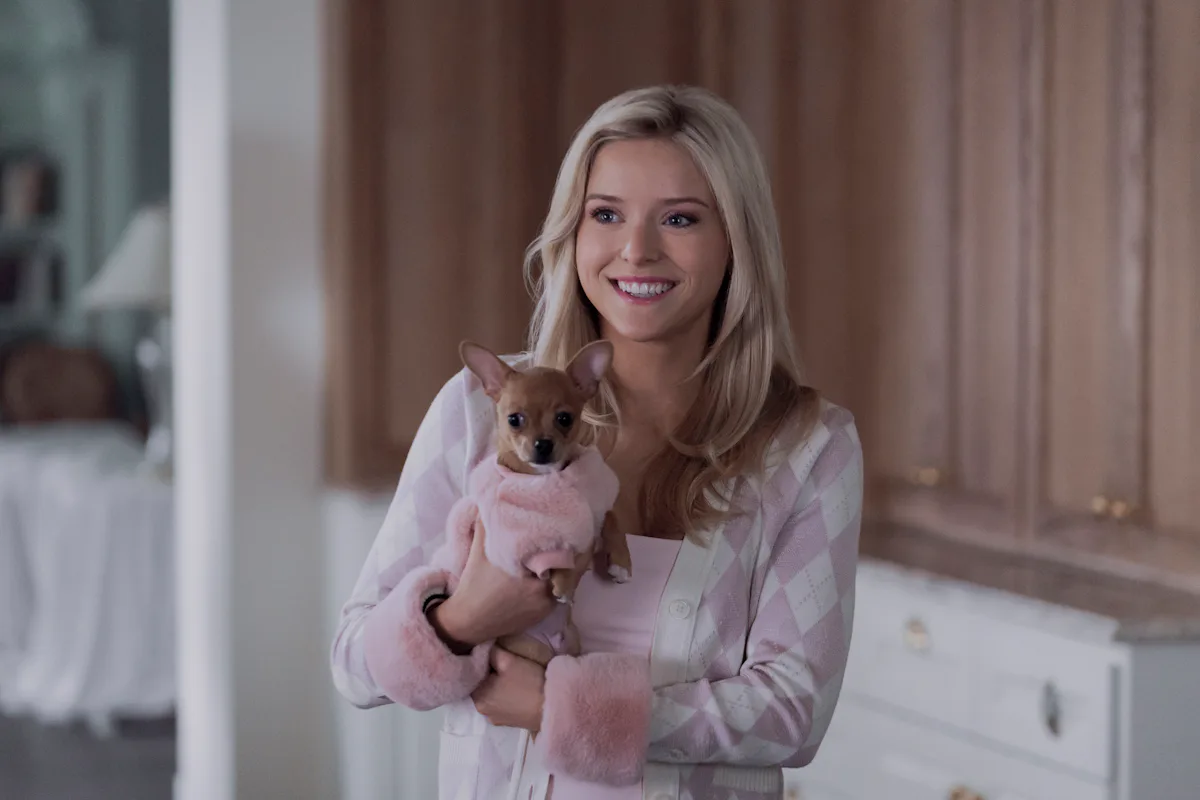
Elle alone racked up approximately 70 looks that made it to camera across the season. As for specific Easter eggs, Byblow confirms there are some scattered throughout the eight episodes, but she doesn’t want to give too much away. “There’s a bag you’ll want to look out for,” she says, hinting that it’s one Eva carries. “We wanted a moment of something being passed along from mother to daughter,” Byblow says.
When you think about it, the whole season is an Easter egg in itself — a full-circle tribute to everything de Rakoff built and everything Witherspoon made iconic. “We are carrying the torch in such a beautiful way that really does reflect what Elle Woods is all about,” Byblow says. “Between the groundwork that Reese did and Lexi really giving an amazing performance — those two talents pushing the character forward — it just gave me the chance to play.” After 25 years, Elle Woods still has that effect on people.
Read on the original site
Open the publisher's page for the full experience