How Fashion Rental Apps Are Changing The Way We Build A Vacation Wardrobe
Our take
The intersection of travel, social media, and fashion has always been a potent cocktail, but the current iteration feels particularly charged. The article in TZR rightly points to the shift from simply experiencing a vacation to meticulously documenting it, a phenomenon amplified by platforms designed for visual storytelling. This isn't just about sharing pretty pictures; it’s about curating a lifestyle, a narrative of effortless cool, often projected onto an audience hungry for inspiration. The rise of fashion rental apps as a solution for building these vacation wardrobes speaks to a deeper trend: a desire for elevated style without the commitment of ownership, and a growing awareness of the environmental impact of fast fashion. We’ve seen a similar shift in beauty routines, as evidenced by articles like I've Spent Years Finessing My "Effortlessly Put Together" Look—These Are the Makeup Products I Swear By, where the emphasis is on achieving a polished aesthetic with a curated selection of products, rather than a massive collection. This reflects a move toward intentionality and mindful consumption – a rejection of the “more is more” mentality.
The appeal of renting for travel is multifaceted. For consumers, it removes a logistical hurdle – packing less, dealing with luggage fees, and the inevitable post-vacation closet overflow. It also allows for experimentation and access to higher-end pieces that might otherwise be out of reach. Consider the allure of a designer dress, perfect for a sunset cocktail in Santorini, without the permanent financial investment. This aligns with the broader trend of "quiet luxury" – a preference for understated elegance and quality over conspicuous displays of wealth. Furthermore, it taps into a growing awareness of sustainability. While rental services aren't without their own environmental footprint (cleaning and transportation), they offer a potentially less impactful alternative to constantly buying new clothes, particularly for items only worn for a short period. The fact that it girls are embracing this trend, as highlighted in The Indie Fashion Brands It Girls Can't Stop Wearing In 2026, demonstrates a shift in values towards a more conscious and adaptable approach to style. Consumers are increasingly seeking pieces that reflect their personal aesthetic while minimizing their environmental footprint.
However, it’s important to consider the long-term implications of this trend. The rise of rental services could further commodify fashion, potentially shifting the focus even more towards fleeting trends and visual appeal. The pressure to constantly present a “perfect” vacation look – facilitated by readily available rental options – could exacerbate anxieties around social media performance and self-image. It’s also crucial to examine the operational practices of these rental companies to ensure they are genuinely sustainable and ethically responsible. While the immediate benefits for consumers are clear – access, convenience, and a degree of sustainability – the broader societal impact requires ongoing scrutiny. Even the excitement surrounding a single, coveted piece, like the one described in I Waited a Year for This Celebrity-Loved High-Street Dress to Return—Now It's Back and Selling Fast can be tempered by the understanding that accessibility through rental offers a temporary solution, not necessarily a shift away from desire and consumption.
Looking ahead, the fashion rental market is poised for continued growth, but its evolution will depend on how it addresses these complexities. Will rental services become a true catalyst for sustainable fashion, or simply a sophisticated form of temporary consumption? The success of these platforms will hinge on their ability to prioritize transparency, ethical sourcing, and a genuine commitment to minimizing their environmental impact, all while catering to the ever-present demand for a picture-perfect vacation wardrobe. The question remains: can the convenience and allure of renting truly translate into a fundamentally more responsible and mindful approach to fashion?
Somewhere between the launch of social apps and the rise of post-pandemic travel, summer vacation season has morphed into summer vacation documentation season. Just ask any fashion-obsessed (or merely curious) girl with an Instagram account and a healthy sense of voyeurism: Between late May and mid-September, certain corners of the internet feel like a never-ending live stream of other people's getaways around the world. Everyone seems to be heading somewhere fabulous, with a seemingly new wardrobe to match. Questions about the budget, or at least closet space, of those in your network may bubble to the surface of your mind. Perhaps, for a second, you might even find yourself feeling jealous of some kinda-sorta friend frolicking around Puglia in linen, then zoom in with an eye-roll, and notice… hey, wait, what?! How did they manage to get their hands on that sold-out Reformation dress you've been stalking for months?
Chances are it's rented — and if you aren't in on the fashion borrowing game yet, your vacation outfits are likely suffering for it. The rise of online lending platforms is making it easy to look like you live the life of a jet-setter, but without dropping jet-setter levels of money in the process. It's no wonder, then, that these services have never been more popular amongst the frequent flyer crowd, who are forever in search of fresh looks for their next adventure.
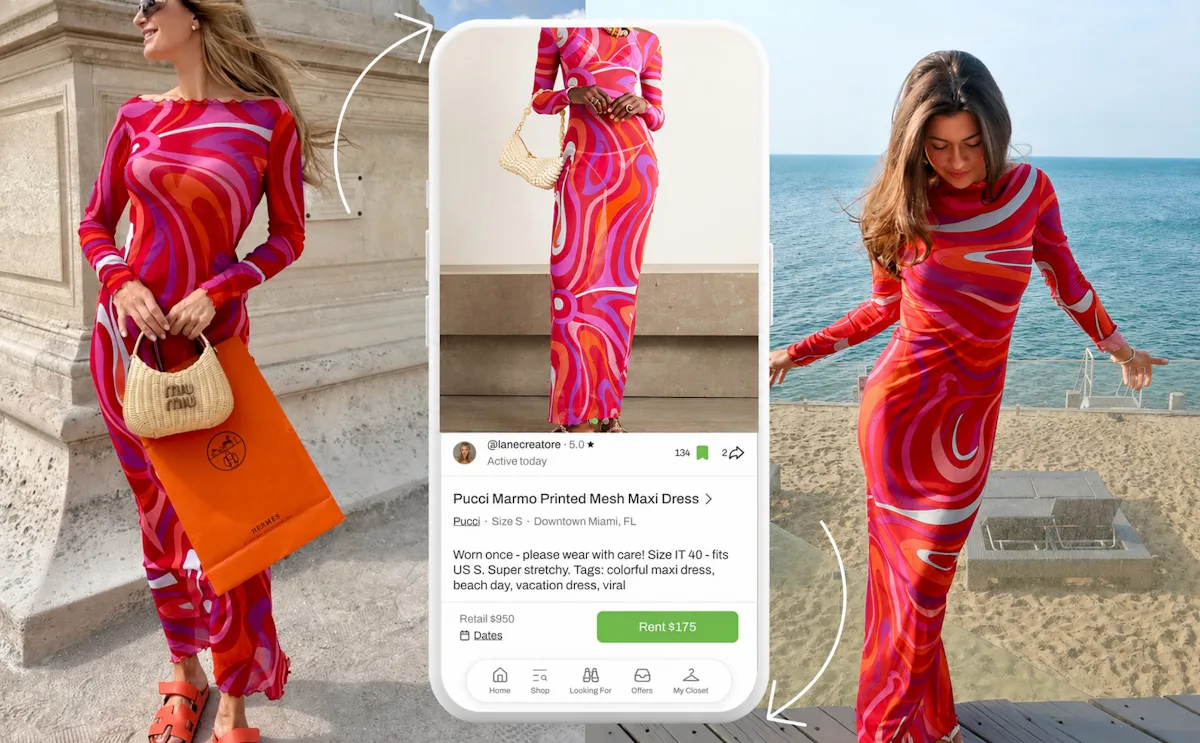
Annie Jorgensen, a New York-based lifestyle creator and frequent user of the Pickle app — which connects hundreds of thousands of users across major American cities, like New York and Miami, to lend from their wardrobes and borrow from others — has been observing the rental economy rapidly expand all around her. "I was at Cannes Lions [in June], and almost every single person I talked to was wearing something that was rented," she says, noting that the movement is a counteraction to the influx of trend-focused brands currently dominating retail.
"Right now it's 'Euro summer,' so it's been really busy," says Pickle co-founder and COO Julia O'Mara. "We're finding that when girls are preparing for trips, especially week-long vacations they need five different outfits for, they want something new they haven't worn," she says, explaining that Pickle offers the opportunity to do just that for far less upfront cash than shelling out for something new — and with the added bonus of having exclusive access to whatever items are currently peaking in the zeitgeist. These could be things that are no longer available in stores, or that the user is interested in trying out before fully committing to a purchase. (Lately, for her team, that's been pretty much any clutch shaped like a fish… viva la Sardine Girl Summer!) Moreover, Pickle offers non-clothing travel essentials — such as old-school cameras and European-grade Dyson Airwrap dryers — that they know users will happily pay to use for the short duration of a trip.
Brooklyn-based content creator and self-proclaimed "Type B shopper" Hana Elson says Pickle has been a game-changer when planning for her work-related travels, which have recently spanned from Spain to Guatemala. "I think when you are in-between seasons, personally or literally, and don't have anything in your closet [for a trip] — or are leaving last minute — [Pickle is] a great thing to use," she says. "If there’s a dress I've been eyeing for a trip and it's sold out, I'll just search for it on there." Meanwhile, anything she does end up purchasing to wear in a specific destination can be added to her digital closet to rent out for extra cash until she needs it again.
Indeed, while peer-to-peer rental platforms offer an affordable packing solution for everyone, they've been a particular boon for those who make a living on sharing their travel looks online — both as a source for cute looks, and as a mode of supplemental income. "I would have all these ski sets that take up so much space in my apartment, and people will rent those out," says content creator and Beech Street swimwear founder Natalie Abatemarco, one of Pickle's top lenders. Listing items from her closet has been a win-win-win situation for her: it frees up space in her small New York apartment and makes her extra cash; plus it’s just plain fun to share items she loves with other people. "It makes me so happy when people rent my things, and I see them posting in it," she says. "Like, nothing makes me happier."
This brings up a nagging question I've felt since I began researching this feature: Does anyone frequently using these services care that they're wearing the same outfit while gallivanting around, say, Paris, only to potentially see it posted on someone else in the same city a week later? It makes me think about when I was a very new editor many years ago, working at the old Condé Nast building in Times Square (the office inspiration for the original Devil Wears Prada movie). My co-workers and I used to joke that you could always tell who worked at Vogue in the elevator because if you inquired after their outfit, you'd get a pinched-lipped smile and evasive non-answer. ("Oh this old thing? I think it was a gift.") Back then, fashion gatekeeping was considered the height of chic, whereas now sharing the style wealth seems to be cool across the board. Just look to Louvelle: The luxury closet rental app, which debuted late last year, has partnered with major fashion industry players, like Bryan Boy and Cass DiMicco, to list extra-special wardrobe items.
"From the lending side, people are incentivized for different reasons: the circularity element, just showing off their items, or to monetize because they're ready to buy their next piece," says Louvelle founder and CEO Tanya Tamer. "A lot of my friends will send me things they haven't bought yet, and they'll say, like, 'I really wanna buy this for this wedding — but how much can I make for it on Louvelle afterwards?'"
In a way, Louvelle has cracked the code on being both democratic and in the IYKYK kind of club you aspire to join. All new members must be vetted ahead of entry, and the products available are curated to meet specific high fashion standards. A good portion of the pieces listed are extra special archival items you'd be hard-pressed to find elsewhere. "Stylists, especially, want to put up their best stuff," says Tamer. "Part of their job is being on the pulse of fashion, so they're not going to share something that no one's going to want." This, naturally, plays well for those seeking a show-stopper of a look for that once-in-a-lifetime dinner reservation abroad or a destination wedding. It gives renters a chance to wear the kind of luxury piece — like, say, a vintage Tom Ford for Gucci cherry-print dress or a Roberto Cavalli zebra-print gown — they wouldn't have financial access to otherwise.
The treasure hunt aspect of digging deep through another person's belongings to find something singularly special appeals to me, a clothes-obsessed person who has built a decades-long career out of her specific sartorial fixations. But I am more interested in understanding how those outside my strange and rarified bubble might go about sifting through the content of someone else's closet. Are they interested in labels? Or if a style is a dupe of a dupe of something that walked down the runway three seasons ago? Abatemarco knows exactly what I mean when I bring this up on our call, noting that she has friends who don't care about fashion at all, and just want an easy and affordable way to look cute and current. “They're like, ‘Oh, easy for me. I'll just rent whatever's trending right now,’” she says. “And they don't care that it might be overdone because it's convenient and they just want to look stylish.”
This sort of frictionless experience is especially easy to find at Nuuly, where customers can rent up to six items at a time from the brand's in-house supply for a monthly fee of $70 (versus picking items one by one from various other users). The company's Senior Marketing Director Julia Piccone explains this is especially handy ahead of vacations thanks to a "Closet List" feature, in which shoppers can compile potential items to rent within specific groups and share the finished line-ups with friends. "When I was planning my visit to Italy last summer, the first thing I did was create a list," she says, explaining that these lists can be shared with your network to weigh in. "So I was able to shop a lot ahead of time, and have a lot of good things to choose from."
In many ways, all these digitally-fueled options are not unlike the analog version of what women have been doing for millennia ahead of an occasion worth dressing up for: tapping into people they trust for opinions and outfits, and raiding the closets of sisters, mothers, aunts, and friends to supplement the items they don't want to buy. And in a world that seems to be changing in weird and sometimes scary ways every day, I find it comforting to know that the true heart of how we style ourselves still lies in the inspiration and support we find through other humans. Even if we've got to go looking for them in an app.
Read on the original site
Open the publisher's page for the full experience