How Strength Training Is Defining A New Era Of Women's Wellness
Our take
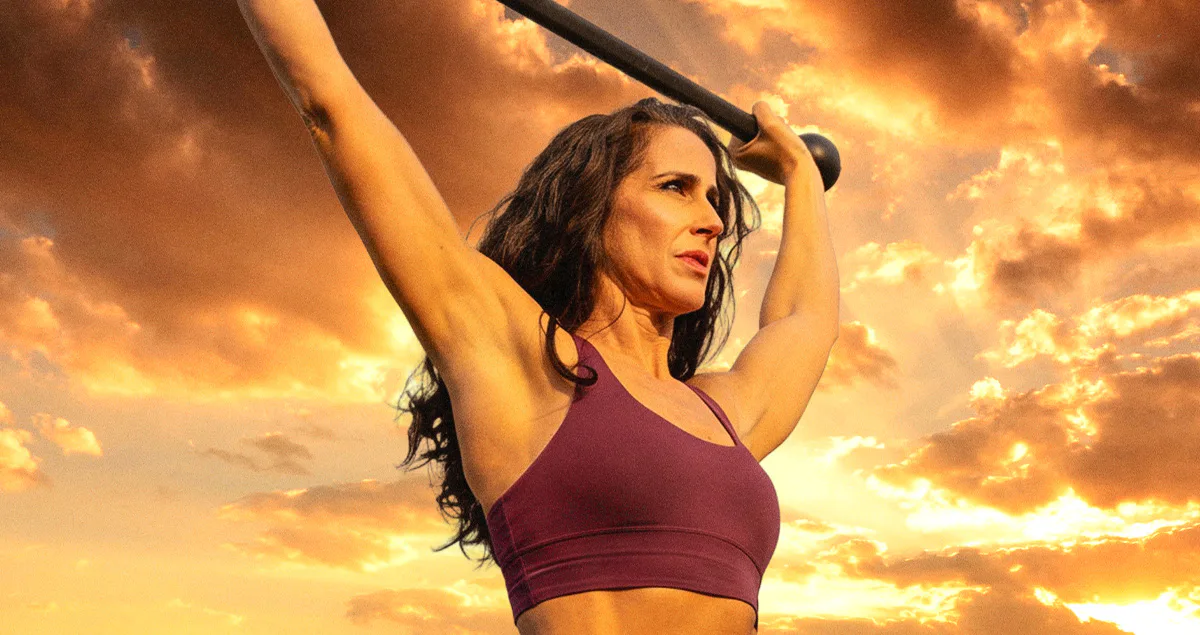
The narrative surrounding women’s wellness has long been dominated by images of delicate yoga poses and gentle cardio, often subtly reinforcing societal expectations of fragility and restraint. This article, "How Strength Training Is Defining A New Era Of Women's Wellness," signals a powerful shift, one where strength—physical and mental—is being actively embraced as a cornerstone of well-being. It's a welcome departure from the often-limiting tropes, and aligns beautifully with a growing cultural understanding that true empowerment stems from feeling grounded and capable within one’s own body. The reclaiming of strength isn’t merely about aesthetics; it’s about agency. It’s about women taking control of their physicality and, by extension, their lives. This echoes the sentiment explored in [The Fashion Industry Has A Lot To Learn From Disabled People], highlighting how challenging established norms and embracing diverse perspectives leads to a more inclusive and ultimately, more powerful understanding of what constitutes beauty and well-being. The shift is also resonating in broader fashion trends, as demonstrated by [It's Here: The #1 Trend Fashion People Will Wear With Jeans This Fall], where a sense of confident, elevated style is emerging.
The stories shared in the article – women finding reconnection with their bodies post-partum, embracing a new level of physical capability, and challenging ingrained stereotypes – are deeply compelling because they are relatable. The journey from the Peloton bike to dedicated strength training, as experienced by Candice Cameron, is a microcosm of this larger cultural movement. It's not about becoming a bodybuilder; it's about cultivating a relationship with your body that prioritizes strength, resilience, and a sense of embodied power. The article correctly identifies the dismantling of stereotypes as a crucial element of this transformation. For too long, weightlifting has been perceived as a masculine pursuit, and women hesitant to enter that space often face judgment or feel unwelcome. This is changing, as women are creating communities and redefining what strength looks like – a powerful testament to the ripple effect of individual acts of courage and self-discovery. And it's a space where expertise matters, as showcased in [I’m a Picky Beauty Editor With Fine Hair—These 6 Hair Brands Are Wildly Underrated], demonstrating that discerning taste and knowledge are valuable assets in any pursuit, including fitness.
What’s particularly significant about this movement is its potential to reshape our understanding of femininity itself. Rather than subscribing to a passive ideal, women are actively building strength, both physically and mentally, and redefining what it means to be powerful. This isn't about rejecting traditionally feminine qualities; it's about integrating them with a sense of inner fortitude and self-assurance. The quiet confidence that emerges from mastering a challenging lift or pushing through a difficult workout isn’t about external validation; it’s about a deep-seated knowledge of one’s own capabilities. This internal shift has implications far beyond the gym, influencing how women navigate relationships, careers, and life’s inevitable challenges. It’s a shift that feels deeply aligned with the ethos of intentionality and self-awareness that underpins a modern, empowered femininity.
Looking ahead, the rise of strength training within women’s wellness represents more than just a fitness trend. It signals a broader cultural reckoning with outdated gender roles and a growing recognition of the importance of embodied power. The key question now is how this movement can continue to evolve to be truly inclusive, ensuring that women of all backgrounds, body types, and abilities feel welcomed and empowered to explore the transformative benefits of strength training. Will we see a continued dismantling of the male-dominated spaces within the fitness industry, and a greater emphasis on building supportive communities that celebrate the diverse expressions of strength? The answers to these questions will shape the future of women’s wellness and its role in fostering a more equitable and empowered world.
Candice Cameron, real estate professional, ex–corporate lawyer, and mother, was 38 and five months postpartum when she was cleared to work out following a C-section. Hungry to reconnect with her body — and looking to increase her fitness — she turned to the Peloton bike. It was during a spin class when her instructor, Callie Gullickson, encouraged riders to try her strength classes. Intrigued, Cameron gave it a try, thanks to Gullickson, who “looked strong, approachable, and nothing like the intimidating bodybuilder stereotype” she’d carried in her head. So during her son’s nap time, Cameron picked up a set of three-pound and five-pound weights and started from square one — with little to no experience in strength training — by committing to three 40-minute lifting sessions a week split between upper body, lower body, and full body. As her consistency grew, so did the weight she was using.
Cameron outgrew five pounds, which became eight pounds, then 10, 12, and beyond. Reaching for a heavier dumbbell each time was “its own quiet milestone,” Cameron says. “From that very first session, I fell in love with having dedicated time to build myself up, both mentally and physically. I embraced the slower pace, the measured repetitions, the breath work, and the tangible feeling of my body working, pushing and pulling the weight,” Cameron tells The Zoe Report.
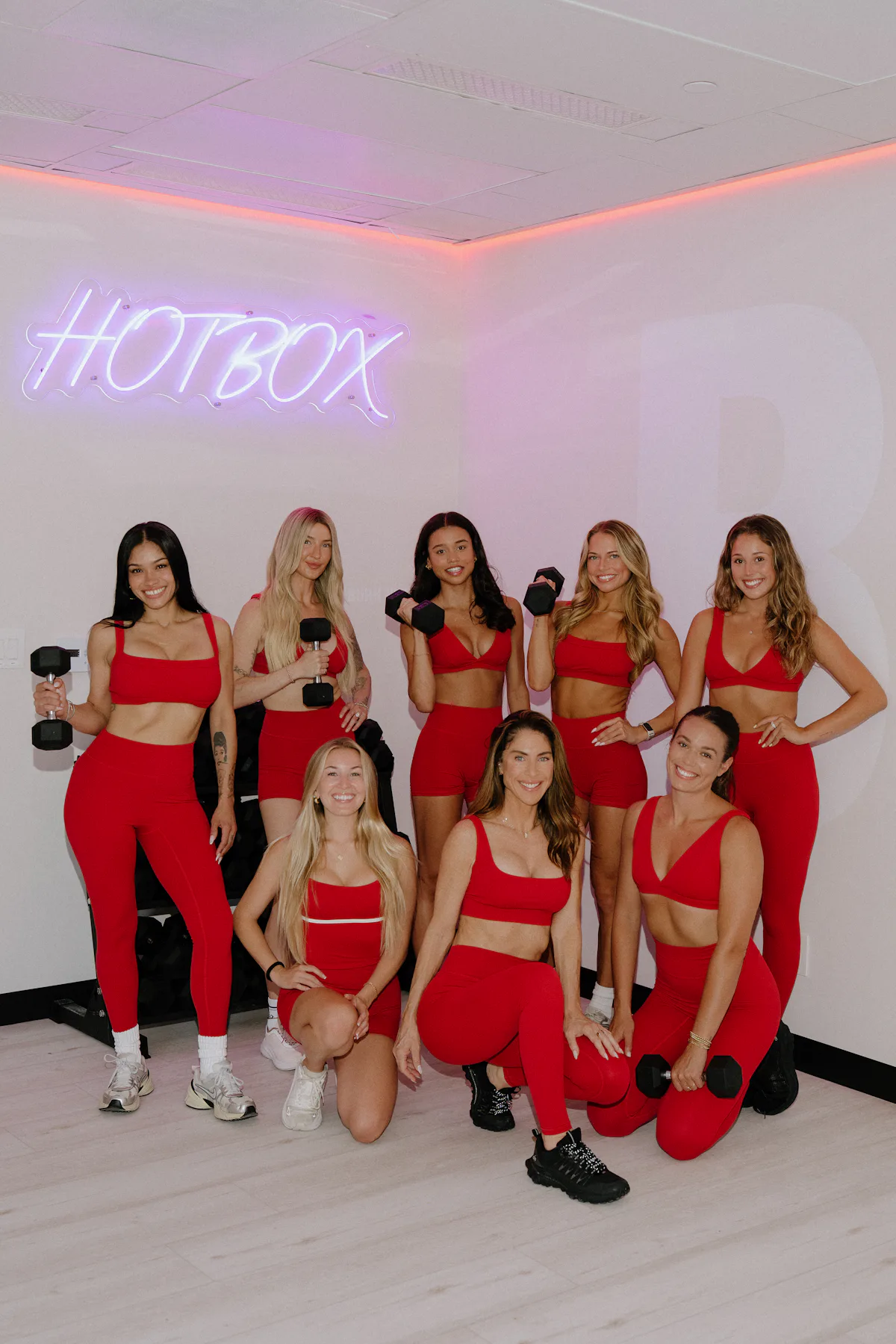
Maria Chase, the founder of BURN and BUILD fitness studios (the latter of which is celebrating its second location in Newport, California on October 16), has a similar story. After giving birth to her second child, Chase began moving her body every single day, at home, telling TZR that “moving in my living room saved my life.” Eventually this movement moved from Chase’s living room and into the gym, where she began lifting weights, to which her body “really responded.”
And these women’s stories are just two of countless others. For years, strength training was believed to be for the boys, a method to “bulk.” Today, however, strength training is rapidly gaining popularity among females in their mid-30s, 40s, and beyond. Now a space of power, longevity, and aspiration, women are picking up the weights and getting to work in the gym. “For years, I had felt intimidated by the weight room at my gym; it always felt overwhelmingly male-dominated and unwelcoming,” Cameron says. “Being able to start in my own living room gave me a safe, judgment-free space to build confidence and realize I can do this.”
The “Why”
The door into any unknown world can be daunting. And when that room beyond the door has been male-dominated for decades, until recently, women have had to find their own way through it. For the four women featured here, that entry point looked different every time: One arrived postpartum, another ahead of her wedding, another out of simple curiosity about what lay beyond cardio. Each started at her own pace, on her own terms.
“I used to have a lot of back pain — I was at acupuncture and the chiropractor every week. I don’t have any back pain anymore. Turns out I just needed stronger muscles. It’s actually kind of miraculous,” says Mia Rigden, MS, CNS, and founder of the Substack Btwn Meals. Rigden began strength training more than a decade ago at the age of 29 ahead of her wedding, growing frustrated with the lack of results from her yoga practice and running. She hired a trainer for her and her husband to start lifting, and it stuck after yielding results that cardio couldn’t deliver, like an increase in her bone density and muscle mass. And now it goes beyond back pain. Rigden noticed the fruits of her labor while on a recent summer vacation. “I really noticed it when we were traveling this summer — I could carry my 2-year-old daughter on my hip while bringing a suitcase up a flight of stairs, no problem. It feels good not to need help,” Rigden tells TZR.
Candace Abbott, a digital marketer and fitness buff, found her way through the door at 26 years old. She was looking for something beyond cardio. “Cardio felt safe and like I couldn’t mess it up,” Abbott tells TZR. “But I suppose I was ready to challenge myself.” This was years before strength training entered the cultural mainstream; Abbott, by her own account, was “ahead of things,” and strength training struck her immediately as something bold, new, and exciting. “There was something about lifting that seemed very ‘badass,’ and as a girl who always played it safe, this felt like the thing I needed.”
That similar discomfort is exactly what Chase has spent the better part of her fitness career trying to dismantle. Following years of training in traditional gyms, where she built her own “don’t mess with me” armor just to get through a workout, Chase set out to design a studio opposite of her past experience. “I wanted the hundreds of women that come through our door to feel safe, to not feel threatened, to not have any gym-bro vibe at all,” she says. The goal, in other words, was never to make women build strength in armor, but rather strength in themselves in a supportive environment and community.
Choosing Strength
For most of these women, the deepest work strength training did wasn’t just physical; it was also mental, and the undoing of beliefs they didn’t know they were bearing.
For Cameron, the belief was the fear of bulking. “The persistent myth that lifting heavy weights would automatically make me look like a professional bodybuilder or add unwanted bulk” was the first thing to go, she says. This belief was replaced by the joyful discovery that heavier weights meant a stronger, more capable body and mind. As her weights increased (over time), Cameron found herself leaner, stronger, and simultaneously not “bulkier.”
“My focus naturally shifted from shrinking my body to fueling and restoring it,” she says. Cameron once treated exercise as a tool for burning the most calories she could; lifting heavier taught her the opposite: to move slower with greater intention and weight in every move. Now training with a weekly strength group — working with barbells and doing deadlifts and thrusters at well over 100 pounds — Cameron traded the goal of shrinking for strength and capability. The stronger she’s become, the more capable she’s felt. Much of this effort has been assisted by proper fueling that works for her. She’s mostly vegetarian and practices a plant-based way of eating, ensuring she hydrates sufficiently along the way.
Rigden faced the same myth but tore it apart with actual data. She committed to walking into the gym with a plan. She began tracking her progress through DEXA scans, watching her muscle mass and bone density increase over time. “There’s a misconception that training for strength will make you bulk, or that it won’t give you the lean, toned body a lot of women are after,” she says. “Building muscle is genuinely hard for most women. Increasing your muscle mass by a pound is an achievement.” The payoff extends beyond the aesthetics: better blood sugar regulation, increased bone density, improved metabolic health, and fat loss (if that’s what you’re aiming for). “It’s not stronger versus smaller,” Rigden says. “It’s about getting the most out of your workouts and building a body you feel confident in that also sets you up for long-term health.”
For Abbott, the belief she busted had nothing to do with bulk; it was all about stepping into her body more comfortably and confidently. She spent years chasing fitness goals through cardio, and it wasn’t until she began strength training that she truly understood just how her body was built: strong shoulders, calves, and athletic all around. “I made peace with this body through lifting because it allowed me to understand my strength and see growth and exceed goals,” she says. That peace showed up physically, too: in 2022, training with a women’s group fitness class, Abbott pushed a weighted sled loaded with 650 pounds across a turf field.
Chase experienced similar belief shifts over her decade of teaching. At the start of her method development, lifting eight-pound weights was challenging; it was “as heavy as I could get” most women to lift at the time. The goal was never to shrink, but rather to help women build muscle. “I always tell people: Stop thinking about losing weight or burning fat,” Chase says. “It’s about building muscle. The more muscle you have, I promise you, it will regulate so many other things in your body without even thinking about it.”
The Big Reveal
Along the way, no matter the journey there, these women discovered so much about themselves through strength training. It blew past any physical goal and ultimately revealed how their bodies function, a deeper understanding of their natural build, and capabilities beyond initial measure.
For Rigden, it was learning through her data: a DEXA scan that tracked her bone density, a marker important for all women to follow. “It’s really helped me feel in control of my body after having kids,” she says.
For Chase, the signal showed up when she was struggling to build muscle and keep weight on a year and a half after opening up her studio. She chalked it up to burnout and had her hormones tested. To her surprise, she has moved through perimenopause and was already in menopause. And the kicker? She experienced very few symptoms; the lack of symptoms she chalks up to her training in conjunction with the regular red-light therapy incorporated in every BURN class.
While her experience is hyper-personal, something worth noting is that muscle mass isn’t just about how a body looks. It’s a marker of how well that body is coping with a hormonal shift most women aren’t warned about until they’re already living through it. In perimenopause and menopause, estrogen declines, and muscle mass declines with it. Research has found that the two go hand in hand: Women with lower muscle mass tend to report more severe menopausal symptoms. A 2025 study of more than 400 peri- and postmenopausal women looked at the association between menopause-related symptoms and muscle mass and the role of estrogen levels. The good news is that this decline isn’t always a guarantee. A 20-week controlled trial found that resistance training effectively counteracts the age- and menopause-related loss of muscle mass and strength in women 40 to 60 years of age. What this means is that muscle can be rebuilt in either of these stages (peri-, menopause, and post). And this goes beyond just muscle building; strength training can also vastly improve perimenopausal symptoms like hot flashes, insomnia, and fatigue, according to a 2025 systematic review of randomized controlled trials. And like Cameron, her muscle building through strength training wasn’t a vanity project — it was a proactive one.
Life Lessons
For these four women, it’s clear that strength training has changed their lives for the better. Each came to this workout modality in their adult lives, and all for different reasons, but all have continued for very similar ones.
For Cameron, strength training taught her to trust the process and slow down, a lesson that, she says, ultimately gave her the confidence to leave a career practicing law for one in real estate, where she has more autonomy over her time. It’s also what she credits with the calm she now brings to raising her son, who — after watching his mother train for years — has started asking to join her. “I can still pick him up and carry him to bed with ease,” she says of her now-7-year-old, 67-pound son, a callback to the 30-pound baby she started with.
For Abbott, it’s the discipline. The routine she has built for herself in the gym gave her confidence that she now applies to her faith and work, along with the firm belief that any goal can be achieved with hard work and perseverance. “Lifting has taught me you’re always working,” she says. “The goal may change, but the intention of improvement does not.”
For Rigden, years of chiropractor visits for back pain stopped slowly over time as her muscles got stronger. “Turns out I just needed stronger muscles,” she says. “It’s actually kind of miraculous.”
For Chase, she’s cultivated a community built on strength. From her living room to the studio floor — including five studios in Southern California, plus the first BUILD studio, making this six total and more on the way — women are welcomed and embraced to set foot in the door and get started whether it’s two pounds or 10.
The connective tissue in these four stories is that you just have to start somewhere, even if that somewhere is small. Cameron started with five- and 10-pound weights and a 10-minute class. “No weight is too light if it challenges you,” she says.
It’s never too late to start strength training, and let these women serve as inspiration. When lifting heavy, Abbott repeats to herself, “You’ve done this before. What makes you think you can’t do it again?” The motto we’ll be sticking with, one rep at a time.
Read on the original site
Open the publisher's page for the full experience