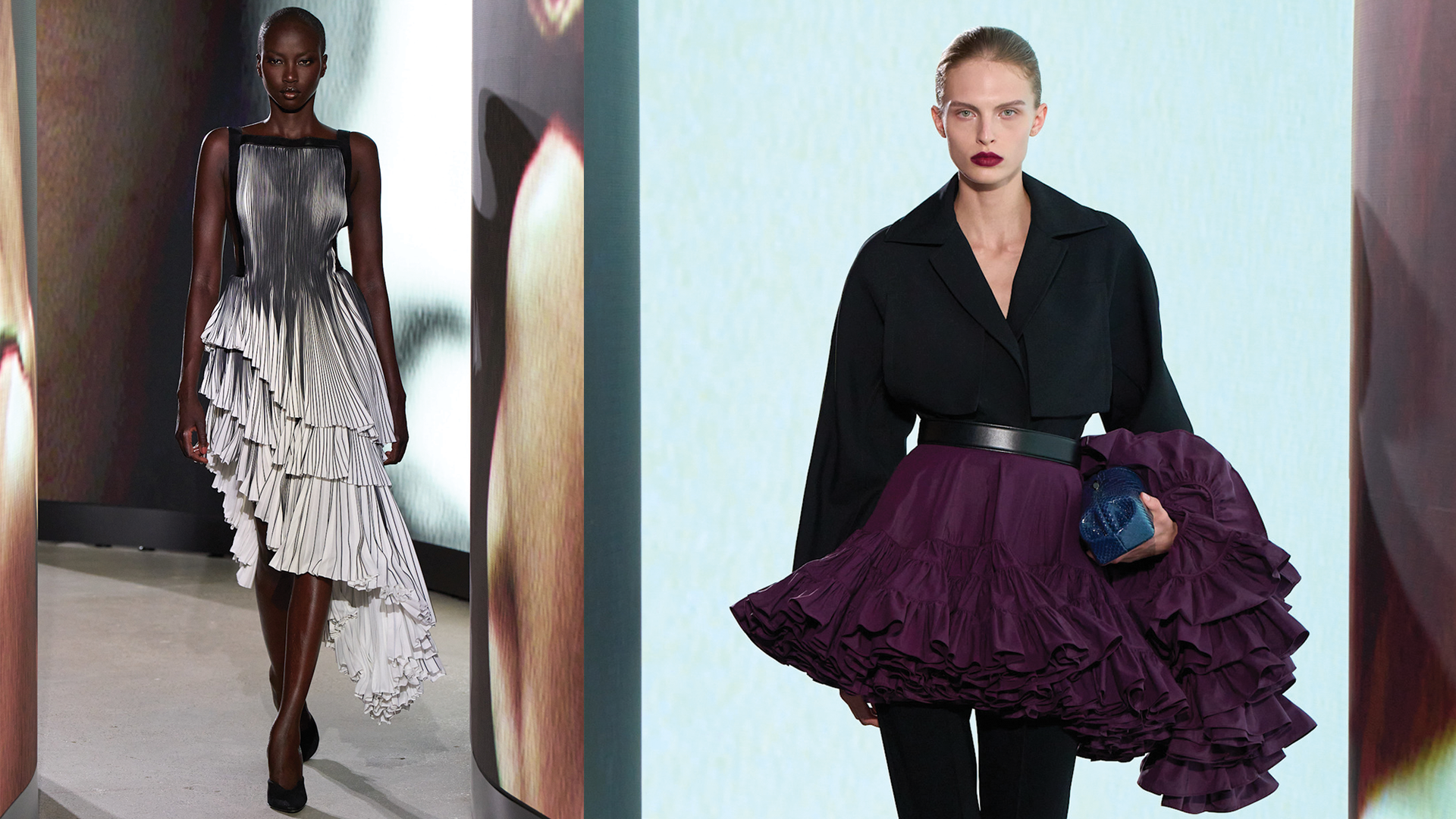
In a fashion ecosystem that thrives on spectacle and the cult of the individual designer, Alaïa's spring/summer 2027 show offered something far more rare: the quiet confidence of a house that knows exactly what it is. This was not a collection about a new creative director's ego. It was a reminder that the most enduring luxury is not attached to a single name, but to a philosophy. And that philosophy, Azzedine Alaïa's unwavering commitment to the female form, was the true star of the show.
This sense of assured continuity feels particularly resonant right now. We are seeing a parallel current in fashion, a move toward substance over noise. Just as I wrote about the understated elegance of The Quiet Allure of Holiday Dressing in Alexa Chung for Reformation, where the power lies in the feeling a garment evokes rather than its seasonal gimmick, Alaïa's design team has delivered a masterclass in restraint. Led by ready-to-wear design director Boaz Eli, the collection did not try to reinvent the wheel. Instead, it refined it. The built-in bustiers, the body-hugging jersey, the perfect black dress, these are not novelties; they are the house's foundational vocabulary, spoken with a new clarity. It is a lesson in how to honor a legacy without being paralyzed by it, and it echoes the signal we decoded in Decoding Loewe's Quiet Signals for 2027: that true class is communicated through precision, not volume.
What makes this moment so compelling is not just the collection itself, but what it signifies for the industry. After five years under Pieter Mulier, a tenure that gave us the Le Teckel bag and unforgettable spectacles like the Guggenheim show, the natural instinct might have been to flinch at his departure. Instead, the design team, many of whom worked under both Mulier and the house's founder, stepped into the quiet. They chose a muted palette of jewel tones over Mulier's brighter pastels, draping for volume over padding. The result felt both deeply Alaïa and undeniably current. It proved that a brand can survive a transition not by chasing a new vision, but by trusting the one it already has. For the woman who invests in these pieces, the takeaway is clear: you are buying into a system of dressing that is built to last, not a moment that will pass. The bra-top-and-skirt silhouette that emerged at Prada and now appears here is not a trend to chase, it is a sign that the industry is collectively exhaling, returning to a more intuitive way of dressing.
The most telling detail of the show, however, was the setting itself: the former Fondation Cartier building on Boulevard Raspail, the same space as Mulier's farewell. It was a deliberate choice, one that refused to erase the past while confidently stepping into the future. The question that lingers is not whether Alaïa will survive, it clearly will, but whether the industry will learn from its example. In a world that often feels like musical chairs, this showing was a breath of fresh air. The house has not announced a permanent creative director, and perhaps that is the point. For now, the design team has proven that the brand itself is the only name that matters.