This Is What Postpartum Psychosis Feels Like
Our take
The raw vulnerability laid bare in Jodi Picoult’s exploration of postpartum psychosis, sparked by an email suggesting it as a novel theme, resonates with a profound and often silenced truth. It's a testament to the ongoing, albeit slow, shift in our cultural conversation around maternal mental health. The sheer weight of expectation placed upon women, particularly after childbirth, is immense, and the potential for devastating mental health crises like postpartum psychosis remains tragically misunderstood. The article’s core question – “I do wonder if it’s just me, or if all women who have babies become so superhumanly attuned?” – encapsulates the isolating fear and heightened sensitivity so many mothers experience, a feeling compounded by societal pressure to portray an image of effortless grace and unwavering joy. This echoes the sentiment in [I turned 1,000 pill blisters into a coat to celebrate someone close surviving depression], where the visual representation of medication serves as a powerful reminder of the ongoing struggle with mental health, and the need for tangible symbols of survival. It’s a conversation we need to amplify, moving beyond fleeting mentions to a deeper understanding of the biological and psychological realities of the postpartum period.
The significance of Picoult's engagement with this topic extends beyond literary exploration; it’s a validation of the lived experiences of countless women. Postpartum psychosis, distinct from postpartum depression or anxiety, is a rare but severe mental illness characterized by rapid onset of confusion, disorientation, delusions, and hallucinations. The potential for tragic outcomes, including infanticide, makes it a particularly sensitive and frightening subject. The historical and ongoing stigma surrounding mental illness, coupled with the societal expectation of maternal perfection, often prevents women from seeking help. It’s crucial to remember that this isn’t a reflection of a woman’s character or parenting ability, but a serious medical condition requiring immediate and specialized care. Furthermore, the article's connection to Picoult’s renowned research process underscores the importance of rigorous investigation and empathetic storytelling when tackling complex and sensitive subjects. The need for thoughtful and nuanced narratives is further highlighted in [Meet the Parents Taking Cooking Classes For Better Family Meals], which emphasizes the proactive steps families are taking to prioritize well-being and connection, a strategy that can be profoundly beneficial in preventing mental health challenges.
What makes this development particularly noteworthy is the growing willingness of public figures to address these difficult realities. Picoult’s decision to consider this theme signals a potential shift in mainstream portrayals of motherhood, moving away from idealized depictions towards a more honest and inclusive representation of the challenges and complexities involved. The conversation surrounding mental health is gradually becoming less taboo, but there's still a long way to go in terms of destigmatization, early detection, and access to appropriate treatment. The willingness to acknowledge the darker aspects of motherhood—the anxieties, the fears, the potential for mental breakdown—is a crucial step towards creating a more supportive and compassionate society for new mothers. We see a parallel desire for authentic expression in [I love this dress. Is it too much for graduation?], where the simple act of seeking reassurance about personal style reveals a vulnerability and desire for validation that resonates deeply.
Looking ahead, it's imperative that we continue to champion initiatives that prioritize maternal mental health. This includes increased funding for research, improved screening and diagnostic tools, expanded access to mental health services, and public awareness campaigns that challenge harmful stereotypes. The exploration of postpartum psychosis by a prominent author like Picoult offers a unique opportunity to raise awareness and spark meaningful dialogue. The question remains: will this increased visibility translate into tangible changes in how we support and care for new mothers, ensuring they receive the help they need to navigate this transformative and often challenging period in their lives, and that those who are struggling feel seen, understood, and not alone?
Content warning: the below contains references to and descriptions of postpartum psychosis and the death of children.
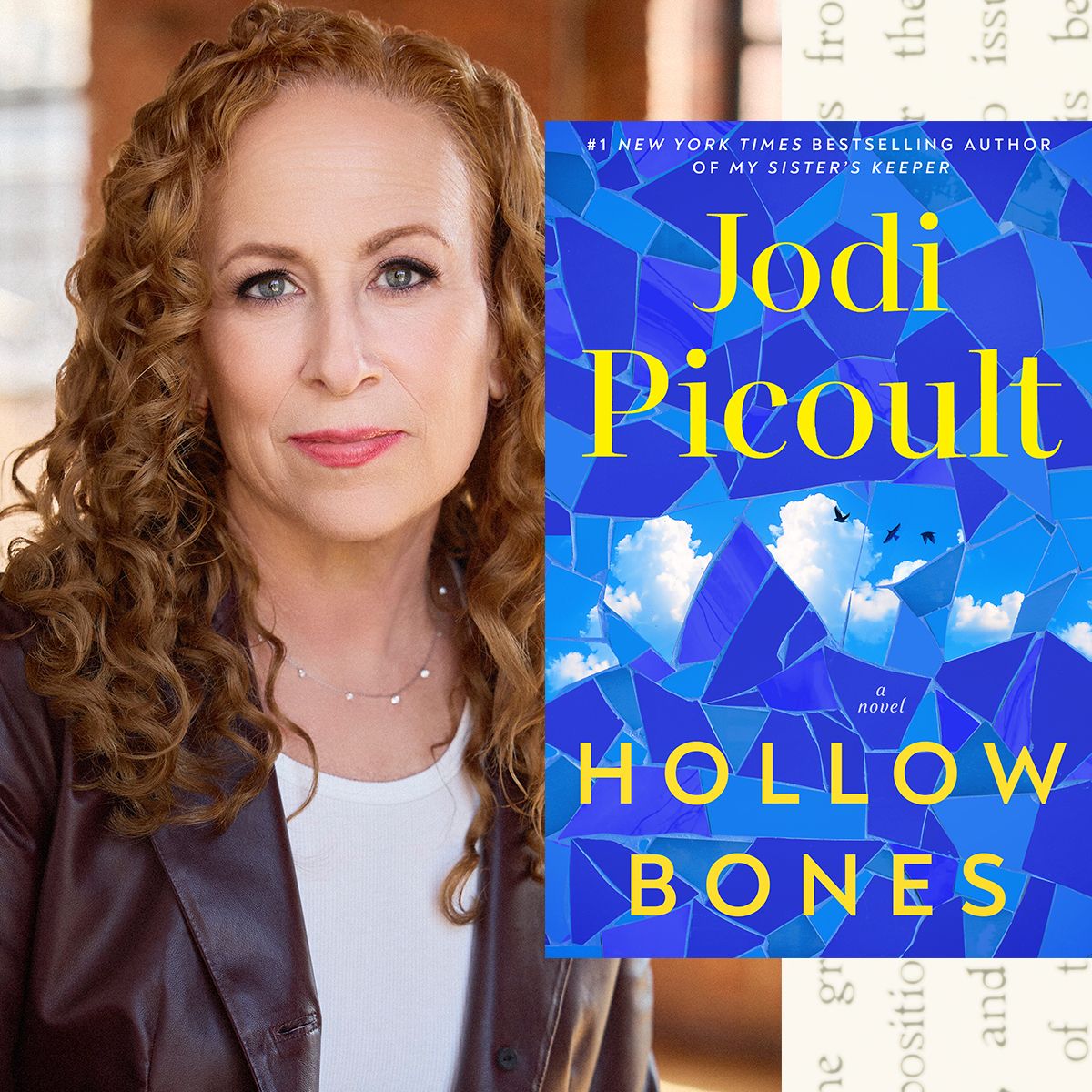
As bestselling author Jodi Picoult considered potential themes for her thirtieth novel, an email arrived. It praised Picoult's famously extensive research process and suggested a topic for her next novel. "You see, I also want to be a voice for those who suffer in silence, mainly those women battling the darker side of postpartum," the letter-writer wrote. "Unfortunately, my reach is limited, as I write to you from a jail cell."
The author of the letter was Solange White, who on August 18 pleaded guilty, but mentally ill, to the third-degree murder of her three-year-old daughter in 2022. White, who told Picoult in her letter that her life had been "hijacked by an evil mix of postpartum hormones, insomnia, and the wrong medical treatment," was sentenced to 16 to 40 years in prison. Weeks later, the highly publicized trial of Lindsay Clancy—who in 2023 fatally strangled her three young children—ended in a mistrial after jurors failed to reach a unanimous verdict.
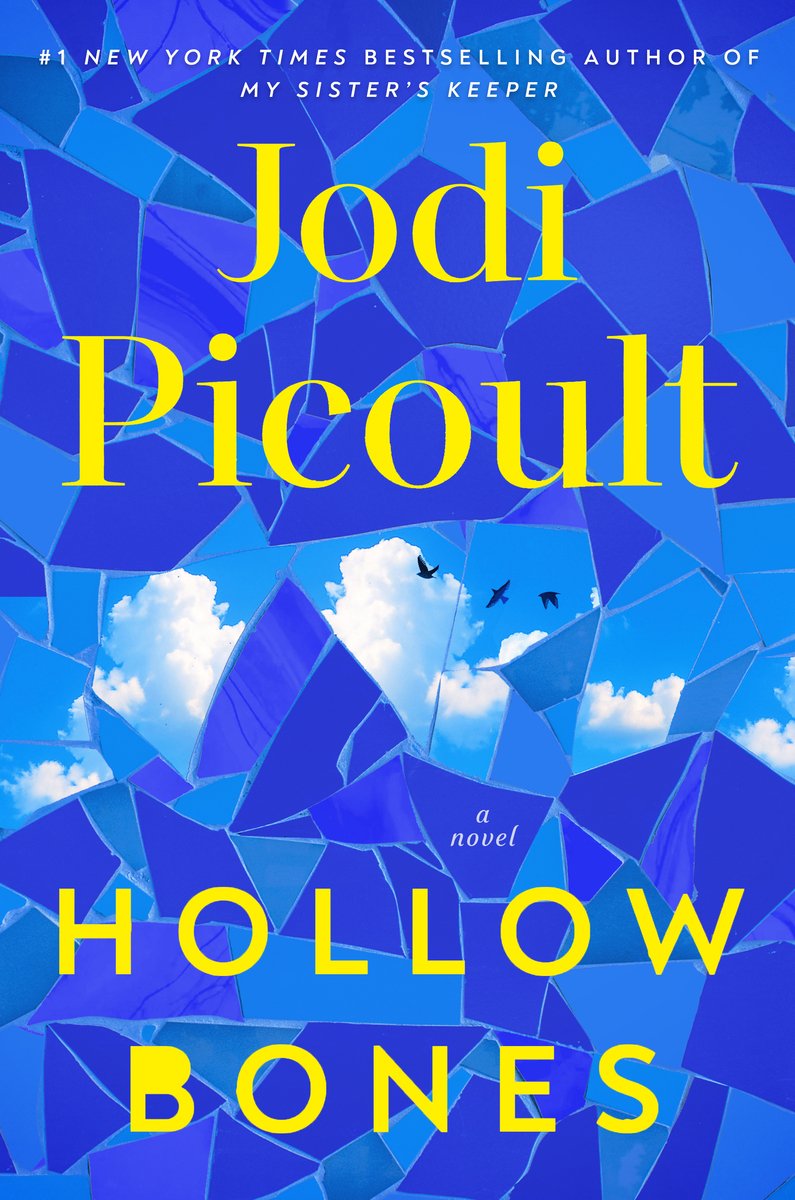
As Picoult considered White's request for a novel that contained themes of postpartum psychosis, she began to research. Picoult learned that the condition affects one in five hundred women. "PPP can literally affect anyone, regardless of socioeconomic status, educational status, or race," she writes in the author's note for Hollow Bones, out September 15. "As difficult as it is to believe, the motive for a woman who commits altruistic homicide is not malicious. She truly thinks she is protecting her child from evil and that the only way to do this is to end their life. A woman with PPP is not a perpetrator but a victim of her own mind ... The most shocking thing I learned about PPP during my research is that since PPP often presents like anxiety and depression at first, doctors use SSRIs to treat it as they would postpartum depression—however, antidepressants exacerbate PPP, leaving the woman in an even more disturbed state."
In the following excerpt from Hollow Bones, a character named Eloise begins to suffer symptoms of postpartum psychosis following the birth of her daughter, Molly. Picoult notes: "Much of Eloise’s frame of mind as she suffered from PPP came from the hundred-plus pages of interviews I did with [White]."
I am inventing colors. These are hues that have never been recorded, ombrés that waver in front of my eyes and metallics so sharp I can taste them. I start writing down their names. The three-dimensional ivory twined with white—I call that “westminster.” The green slide to brown: “crepuscule.” The bubbling orange of the sun as it melts into night: “fervent.” One day, when Molly is older, I will mix these in paints, so that there can be a visual record of them.
Although I am still not sleeping, it is no longer an issue. It was almost as if I had to hit rock bottom before I could hit my stride. As it turns out, I don’t need sleep; my body only had to level up, unlocking new reserves. I now sense when Molly is going to wake to feed seconds before she cries.
I’m buzzing, all the time, my skin conducting electricity. I am suddenly so aware.
I do wonder if it’s just me, or if all women who have babies become so superhumanly attuned. But the one time I get up the nerve to ask someone—a stranger at the pediatrician’s office with a baby roughly the same age as Molly—a thought curls like smoke in my mind: We do not speak of this.
I remember once hearing that autism is the brain’s inability to filter out stimuli—that people on the spectrum experience everything all at once, unable to tune out the extraneous bits. I, too, am being bombarded. Stimuli come at me in tidal waves; it’s all I can do to stay afloat. As a result, something has to give. So while my mind is spinning like a pinwheel, I sometimes forget which buttons to push on my washing machine to do laundry. I can’t remember how to roast a chicken, although I’ve done it a hundred times.
The flip side of this hyperfocus is that, now, I also am aware of everything that can go wrong. What if there is a fire and I can’t get Molly out of our building? I pull the couch away from the window because twice a year or so a bird smacks into the glass, and who knows if the next time it will smash through. I am so scared of tripping when I’m walking down the front steps of the apartment with Molly in my arms that yesterday, I sat on my butt and scooted down. I put away all the glass tesserae of the unfinished mosaic—choking hazards. There are a million and one ways that I could inadvertently hurt my child. You could, says the smoke in my head. You might.
Five days after Molly is born, Evie asks to visit. Adam is still in California, and I haven’t seen anyone but the pediatrician. I am about to say no—I want to make sure Molly has a little more immunity from disease before I expose her to the world—but I cannot force the word out. “Eloise?” Evie says, worried. “Don’t move. I’m coming.”
Don’t move. As if I could! Where would I go? I find myself laughing uncontrollably, while Molly’s tiny face peers up at me. And then, the laughter coagulates, and suddenly it’s dripping down my cheeks. Molly starts crying, too. I should walk with her—motion soothes her—but what if I drop her? So instead, I rock back and forth as her cries get louder, sharper, spiked.
Evie lets herself in with her key—she takes care of our apartment when Adam and I go away—and finds me sitting on the floor with Molly shrieking. She plucks the baby out of my arms. Molly immediately stops wailing.
You see? You are bad at this.
“Why are you sitting on the floor?” she asks, her eyes cutting to the couch, which is still pulled far away from its spot beneath the window.
I am about to say So I would not hurt her when I realize how that will sound. Evie may be my best friend, but she is practical, and if I tell her the truth—that I’m being watched, that I have so much energy I can see it moving around me like an aura, that I’m afraid of injuring my child—she will think I’m insane. She will tell Adam, and I’ll get taken away from Molly.
I don’t know how long I sit there in silence, but Evie touches my shoulder. The baby is not in her arms anymore, and I startle. “She’s just over there,” Evie says, and I see Molly on the couch.
(She could roll off.) She can’t roll yet. (It could still happen.)
I do wonder if it’s just me, or if all women who have babies become so superhumanly attuned.
Evie strokes my hair off my forehead, the way she did the first time I drank at RISD and spent the night projectile vomiting into the toilet. “When was the last time you ate?” she asks.
“She nursed twenty minutes ago . . .”
“I asked when you ate. Never mind. Molly and I are going to whip you up something while you take a nap.” She hugs me. “I’ve got you.”
I do not remember getting into the bedroom, but I lie down dutifully on the bed. I stare at the ceiling. I take deep breaths. But even though I’d trust Evie with my life, or my daughter’s, all I can think about is the distance between me and the baby. Fifteen feet, maybe, with a door between us.
I get up, wrench open the door. Evie is in the kitchen, stirring something on the stove. It smells cheesy and rich and my mouth waters. She holds Molly in her free arm, careful to keep her far from the flames.
(Which is more than I can say for you.)
Evie grins. “Look, angel. Your mama’s awake.” She turns to me. “How do you feel?”
“So much better,” I lie.
Evie looks at me gently. “Listen. This is hard.”
I nod. “I know.”
My neck prickles. I do not have to turn to realize that Evie has moved the couch to its original spot beneath the living room window. Dragging it back to the middle of the floor is the first thing I do when she leaves.
Sometimes I look at my baby and calculate the mathematics of her existence: the sweet parabola of her cheek, the constant of her heartbeat, the daily derivative—her rate of change. The limit I can feel for her, which skates along the axis of infinity.
And sometimes I look at her and think she will be the death of me.
Excerpted from Hollow Bones by Jodi Picoult. Copyright © 2026 by Jodi Picoult. All rights reserved. No part of this excerpt may be reproduced or reprinted without permission in writing from the publisher.
Read on the original site
Open the publisher's page for the full experience