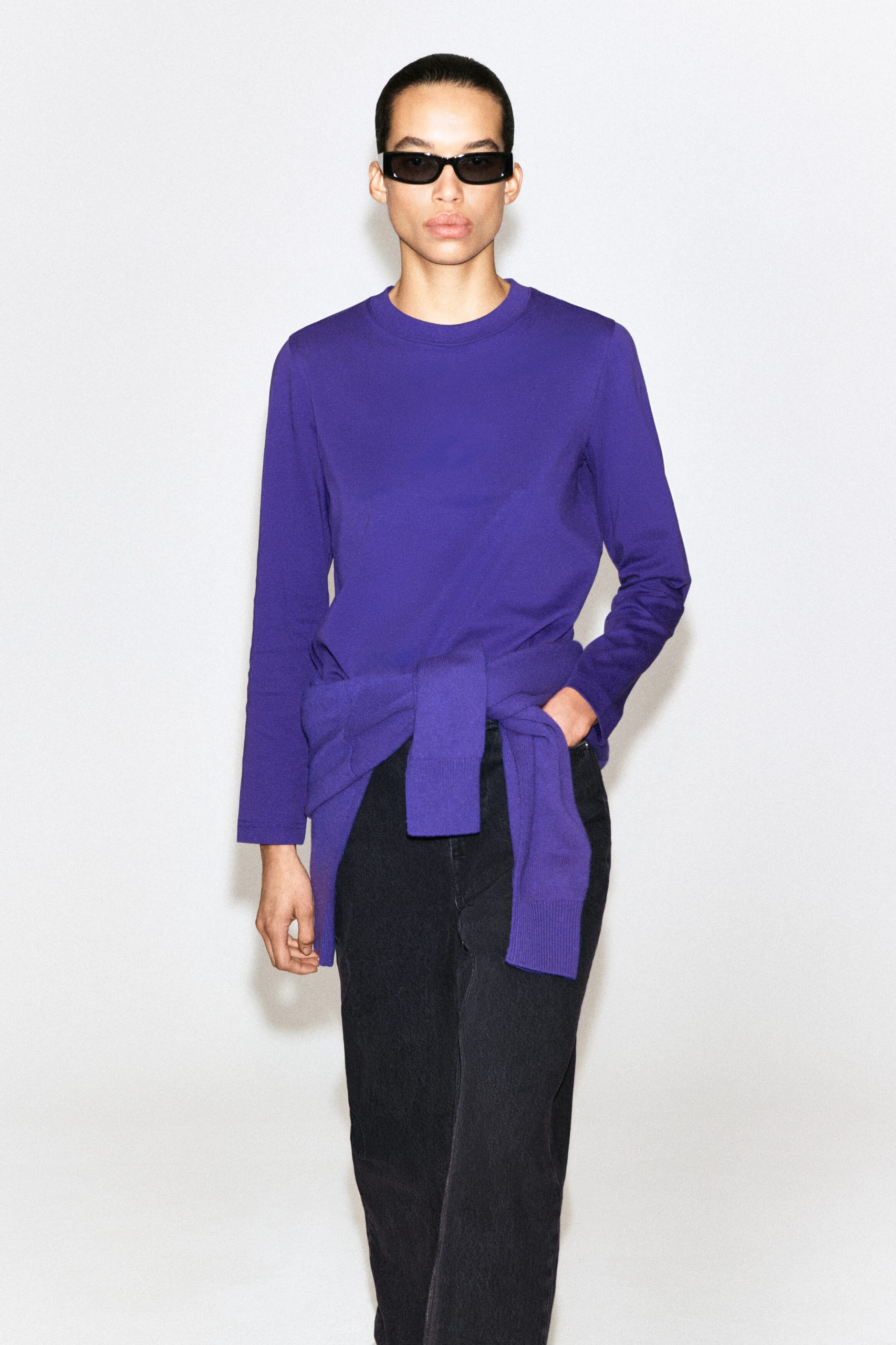
There is something quietly radical about committing to a palette before the season has fully announced itself. The article on two autumn colours the elegantly styled over-fifties are choosing now understands that style at its most refined is not about chasing novelty but about returning to what feels true. We agree: the most compelling wardrobe decisions are never loud, they are felt. This is not a trend report in the conventional sense, it is an observation of instinct, and that instinct is worth examining. For our readers, the practical takeaway is this: the colours you choose for autumn should not be dictated by a moodboard, but by a sense of inner alignment. If you are drawn to a shade, wear it before you have justified it. That is the difference between dressing well and dressing with purpose.
The piece's reference to Paris and its unofficial colour code, black, grey, white, denim, echoes something we explored in The Quiet Power Move for Autumn, Styled in Knitwear. There, we noted that cosy and polished need not be opposites; here, the same principle applies to colour. The over-fifties women in the article are not avoiding colour, they are selecting it with the same restraint that makes a knitwear silhouette feel intentional rather than accidental. One of the hues mentioned is a deep, earthy rust, a shade that carries warmth without demanding attention. The other is a softened olive, a colour that sits somewhere between neutrality and statement. Neither is new, and that is precisely their power. They are not here to announce a shift; they are here to accompany a life already in motion.
This approach to colour mirrors the attitude we admired in Victoria Beckham Steps Into Her Own Fall 2026 Campaign. Beckham does not sell a garment; she presents a version of herself that is already complete, and the campaign is simply a window into that world. The women in this article operate the same way. They are not wearing rust and olive because a stylist told them to. They are wearing them because these colours feel like an extension of their own quiet authority. That is the difference between following a trend and inhabiting a look. For our readers, the question becomes not "what should I wear this autumn?" but "what colour already lives inside me?" The answer is likely not a neon or a fad. It is probably something you have worn before, something you keep returning to.
The specific consequence to watch is how this sensibility scales. If the over-fifties are leading with this kind of restrained confidence, it signals a broader cultural shift away from seasonal frenzy and toward personal continuity. The next time a trend report tells you to buy something new, ask yourself whether it feels like a natural part of your existing vocabulary. If it does not, let it pass. The most elegant colour you can wear this autumn is the one you already know suits you, and that is not a limitation, it is a liberation.