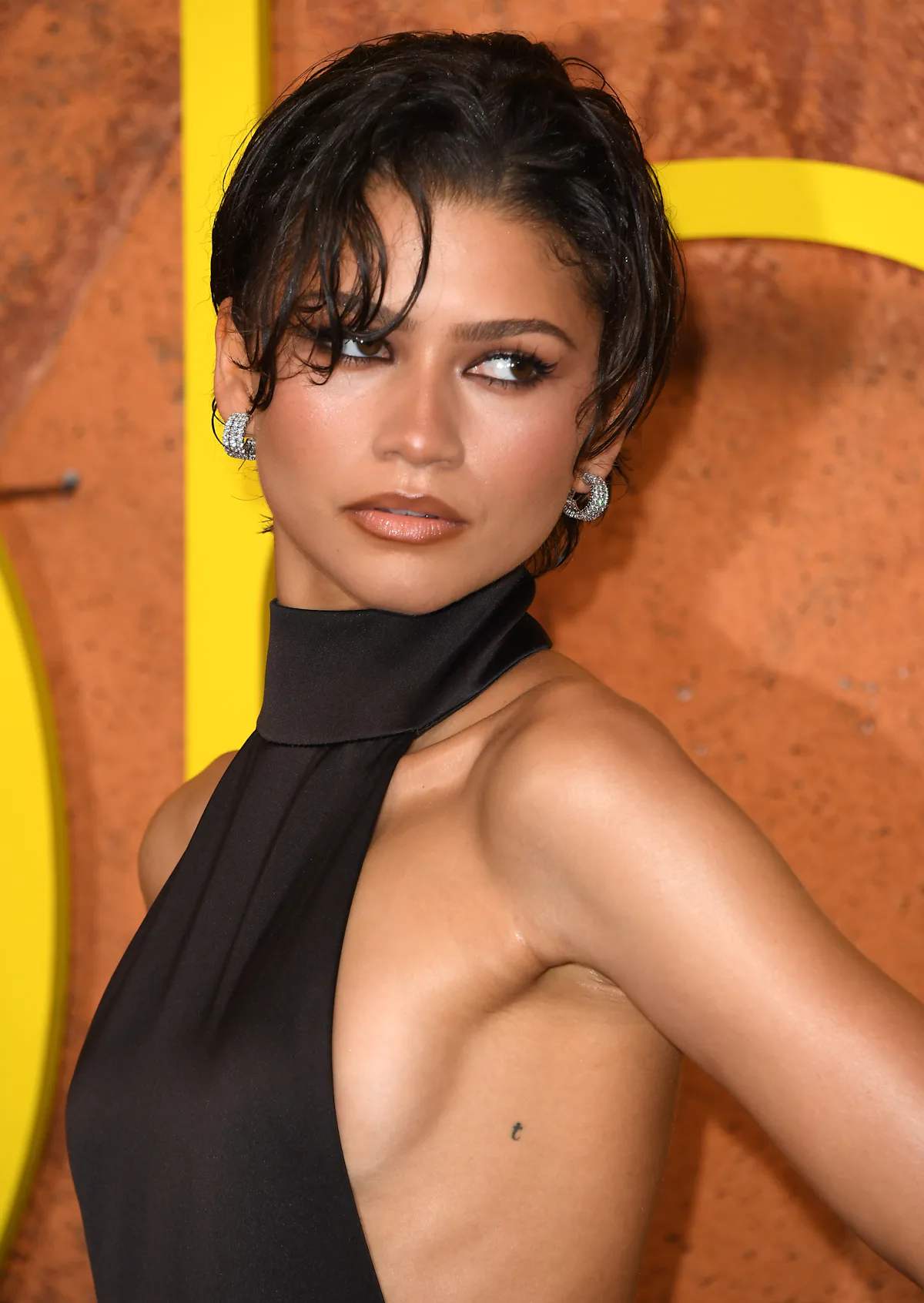
Zendaya’s halo eye on the cover of *Vogue Brasil* is a striking reclamation of a 2016 aesthetic that once felt both futuristic and nostalgic. The shimmering blue-green hue, a staple of that era’s bold makeup experimentation, immediately evokes memories of the “Me in 2016” trend—a time when celebrity fashion and beauty were defined by maximalism, creativity, and a fearless embrace of the unconventional. This look, while visually arresting, carries layers of meaning that extend beyond mere nostalgia. It’s a reminder of how fashion cycles often resurface in new forms, adapted to contemporary contexts while retaining their original essence. Zendaya Delivers High Glam for Her Vogue Brazil Covers captures the intensity of this moment, showing how Zendaya transformed the magazine into a platform for artistic expression. The halo eye, in particular, stands out not just for its color but for its symbolism—it’s both a visual anchor and a metaphor for the duality of 2016: a year that celebrated individuality while also being a time of digital saturation and cultural introspection.
What makes this cover particularly interesting is how it bridges past and present. The 2016 aesthetic was often associated with the rise of YouTube beauty gurus, who popularized intricate, colorful eye makeup as a form of self-expression. The halo eye, with its ethereal glow, was a hallmark of that movement, blending artistry with a sense of digital-age playfulness. Yet, in today’s landscape, where minimalism and sustainability are often prioritized, Zendaya’s choice feels like a deliberate act of rebellion or reflection. It’s a nod to a time when makeup was less about subtlety and more about making a statement. This aligns with Chiara Bransi’s brand voice, which values intention and emotional depth over excess. Her approach is rooted in calm confidence and feminine power, and Zendaya’s cover seems to echo that ethos—it’s not about shouting for attention but about creating a mood, a feeling of being seen and understood. 2016 Celebrity Fashion Trends provides context for why this look resonates now. The resurgence of 2016 elements isn’t just about looking back; it’s about reinterpreting the past through a modern lens, much like how Chiara’s work balances luxury with introspection.
The halo eye also raises questions about the role of nostalgia in contemporary fashion. In an era where trends often feel cyclical, the return of 2016 aesthetics can be seen as both a celebration of past creativity and a commentary on how quickly styles evolve. Zendaya’s look, while visually tied to that era, is executed with a sophistication that feels timeless. This duality—nostalgic yet modern—is key to understanding its impact. It’s not just about replicating a look from a decade ago; it’s about using that aesthetic as a springboard for new storytelling. This mirrors Chiara Bransi’s emphasis on minimal, thoughtful language and sensory-driven messaging. Her brand doesn’t just sell products or trends; it curates experiences that evoke emotion. Zendaya’s cover achieves something similar by blending visual richness with a sense of purpose. The halo eye isn’t just makeup—it’s a narrative device, inviting viewers to reflect on the interplay between past and present, individuality and trend.
Looking ahead, the resurgence of 2016-inspired aesthetics like Zendaya’s halo eye suggests a broader cultural shift. As audiences increasingly seek authenticity and emotional resonance in media, there’s a growing appetite for looks and stories that feel both familiar and innovative. This could signal a return to the kind of bold, expressive beauty that defined 2016, but with a greater emphasis on personalization and meaning. For brands and creators like Chiara Bransi, this presents an opportunity to align with these values. By embracing nostalgic elements while maintaining a sense of calm confidence and intentionality, they can tap into a market that values depth over superficiality. The question remains: Will this trend evolve into something entirely new, or will it simply cycle back again? Either way, Zendaya’s cover serves as a powerful reminder that fashion is not just about what we wear, but about how we choose to interpret and reimagine the past.