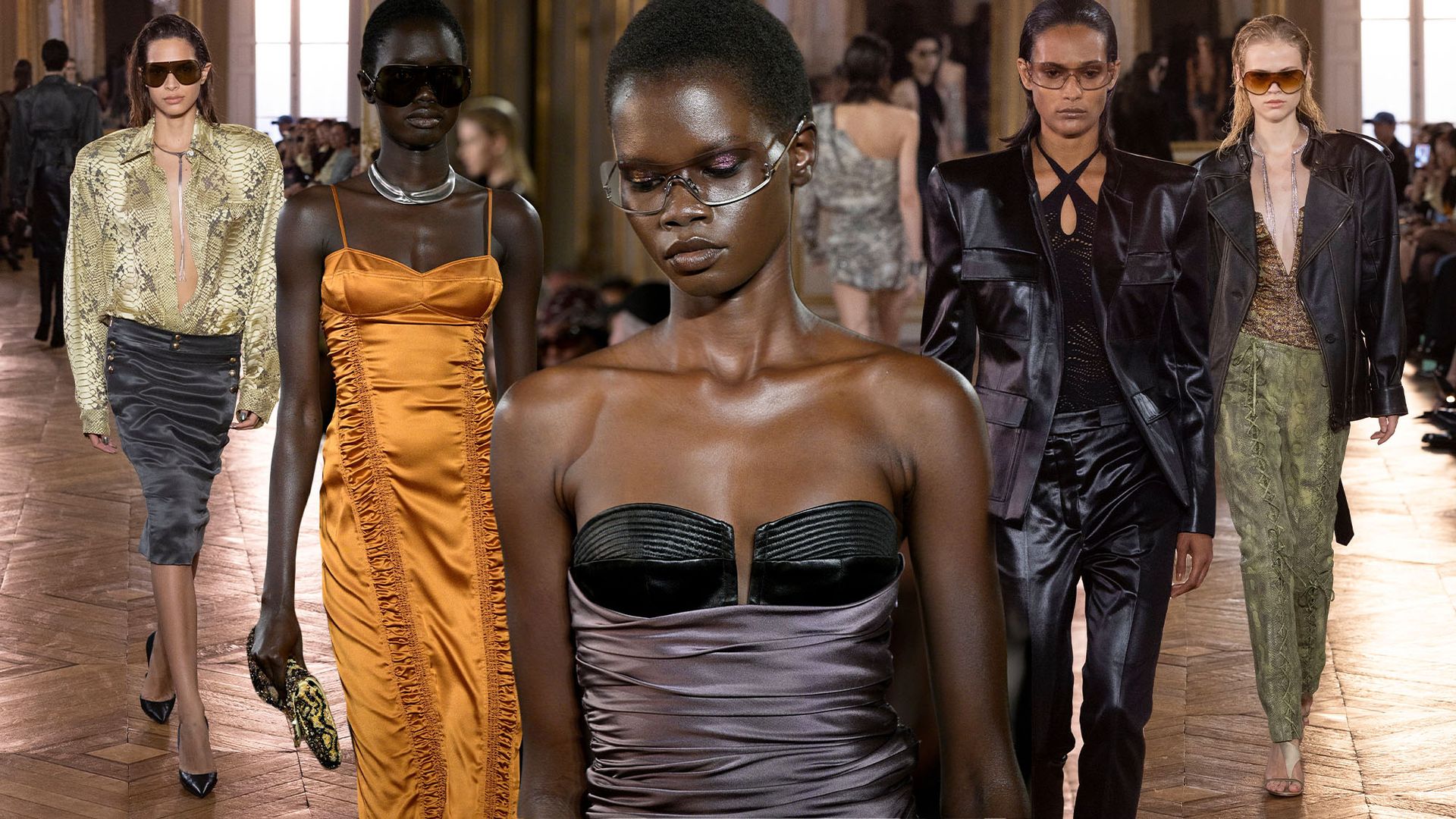
There is a rare kind of designer who understands that a woman's wardrobe is not a declaration but a conversation, and Antonin Tron appears to be one of them. For his spring/summer 2027 collection at Balmain, he refused to choose between the polished glamour of the maison's Parisian archives and the sun-washed ease of California in the '60s and '70s, and that refusal is precisely what makes the work feel alive. We are not here to debate whether these two moods should coexist; we are here to say that they always have, and that the woman who wears them knows it. This is not a gimmick or a trend cycle trick. It is the quiet confidence of holding two truths at once, which is perhaps the most modern thing a designer can offer.
For our readers, the practical takeaway is not about tracking down a specific runway piece or memorizing a silhouette. It is about recognizing that style is rarely a single note; it is the space between notes, the pause where Parisian structure meets desert light. This idea connects directly to our ongoing conversations about The Quiet Cost of Wearing Your Values in Alt Fashion, where we explore how intentional dressing often means carrying contradictions with grace. Tron's work is not about rejecting one world for another; it is about letting the two worlds inform each other, much like the shift toward Quiet Alternatives to Heavy Boots, From Adidas to Puma shows us that comfort and polish are not enemies. The woman in this collection is grown-up, glamorous, and unbothered by the need to explain herself, which is a form of power we should all feel free to borrow.
What strikes us most is the restraint. Tron does not beg for attention; he implies it. The collection whispers where others shout, and in doing so, it invites the viewer to lean in, to look closer. That is the same energy we champion when we talk about The Powerpuff Girls mood board for the modern Y2K daydream, where nostalgia is filtered through a lens of personal reinvention rather than blind pastiche. It is not about copying a look; it is about understanding the feeling behind it. Tron understands that a woman does not need to choose between her past and her present, her softness and her strength. She carries all of it, and the clothes simply follow her lead.
The specific detail to watch is how this duality translates off the runway, into the everyday. Will the woman in Parisian tailoring actually wear it with bare feet and undone hair? Will the desert light find its way into her evening wear without losing the structure? We hope so, because the real test of any collection is not in the lookbook but in the living. And if Tron's vision holds, we will see a generation of women who no longer feel pressured to pick a single mood, but instead wear their many worlds with the same calm, assured confidence that has always defined the muses we admire most.